

TLDR:
- Don’t list interpersonal skills separately; instead, embed them in achievement bullet points using [Action verb] + [Skill in context] + [Quantifiable result]
- Identify which interpersonal skills to showcase by analyzing the job description for repeated terms, then use that exact terminology in your resume, not synonyms
- Place strategically: embed 60-70% of your work experience bullets with interpersonal skill demonstrations, include targeted keywords in a skills section for ATS, and mention 1-2 key strengths in your professional summary with context
Interpersonal skills determine whether you get the job, or get filtered out before a human ever sees your application.
92% of employers say soft skills matter as much, or even more, than hard skills, yet most resumes fail to demonstrate them effectively. The problem? Job seekers either list interpersonal skills as vague buzzwords (“excellent communicator”) or bury concrete examples where Applicant Tracking Systems and recruiters can’t find them.
What Are Interpersonal Skills?
Interpersonal skills are the abilities you use to interact, communicate, and work effectively with others. Unlike technical skills (hard skills) that you can measure and certify, interpersonal skills, often called soft skills or people skills, reflect how you navigate relationships, resolve conflicts, and collaborate in professional settings.
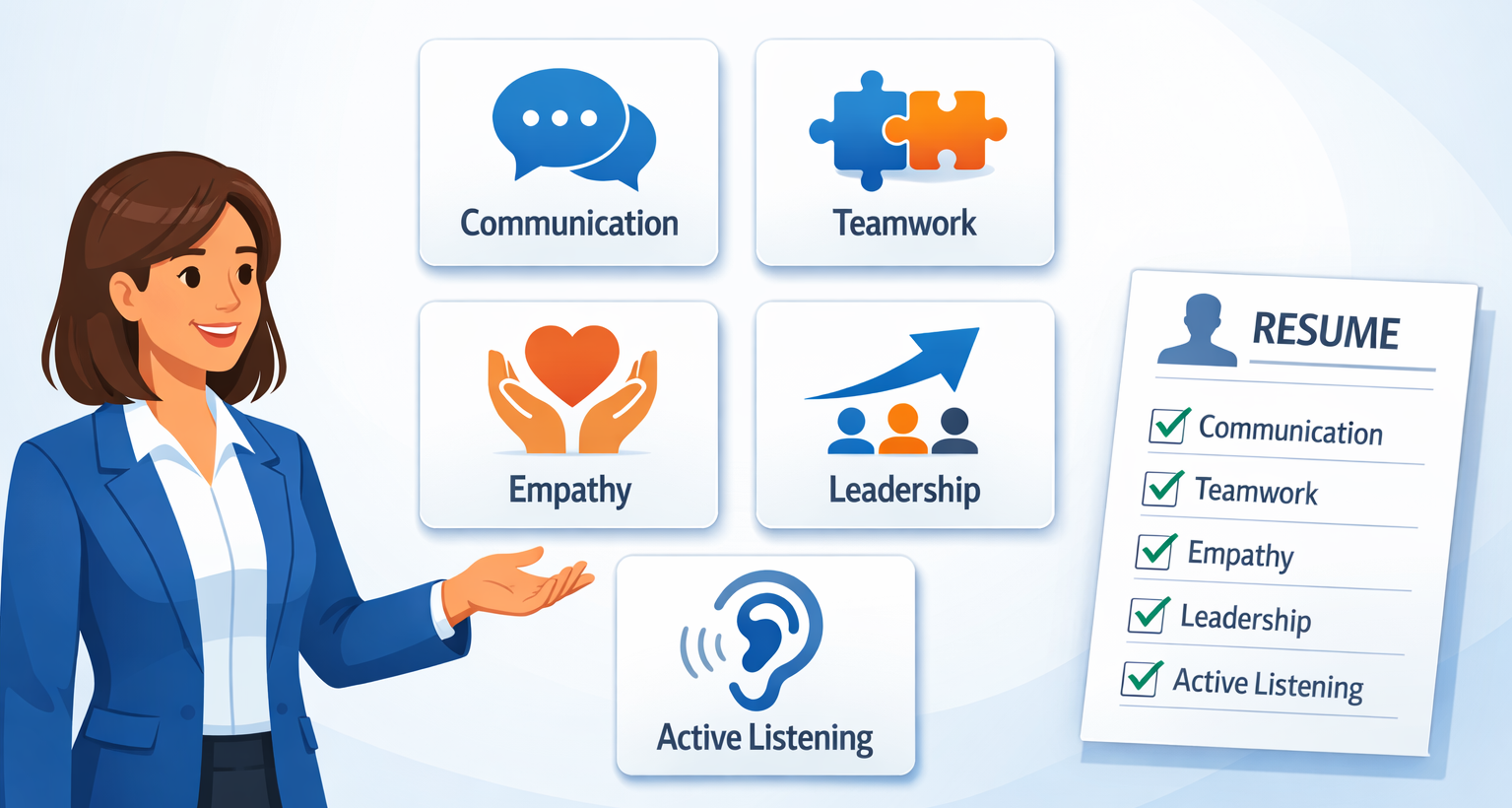
Core categories of interpersonal skills include:
Here’s what makes interpersonal skills different: they’re contextual and relational. You can’t demonstrate communication skills in isolation as you show them through specific interactions, outcomes, and situations.
Why Interpersonal Skills Matter to Employers
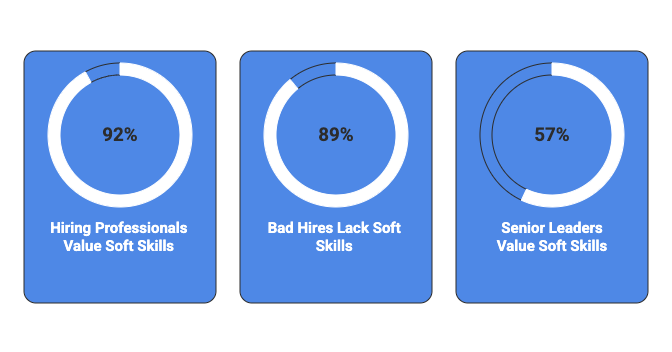
Research from LinkedIn’s Global Talent Trends report shows that 92% of hiring professionals believe soft skills are equally or more important than hard skills. Yet 89% of bad hires typically lack critical soft skills, and 57% of senior leaders today value soft skills more than hard skills. On top of that, conflicts cost companies an average of $359 billion per year
For recruiters, interpersonal skills signal:
The challenge? Most Applicant Tracking Systems scan for interpersonal skills keywords, but recruiters want proof. Specific examples showing how you’ve applied these skills to achieve results.
The 12 Most Valuable Interpersonal Skills for Your Resume
Not all interpersonal skills carry equal weight. Based on analysis of thousands of job descriptions across industries, these 12 skills appear most frequently and matter most to employers:
| Interpersonal Skill | Why Employers Value It | Related Keywords |
|---|---|---|
| Communication | Foundation for all collaboration; prevents costly misunderstandings. Learn how to showcase your communication style ⟶ |
Verbal communication, written communication, presentation skills, clarity |
| Teamwork | Essential for cross-functional projects and organizational goals | Collaboration, cooperation, team player, group dynamics |
| Emotional Intelligence | Predicts leadership success and conflict management ability | EQ, empathy, self-awareness, social awareness, relationship management |
| Active Listening | Reduces errors, improves customer satisfaction, strengthens relationships | Attentive listening, comprehension, responsive communication |
| Conflict Resolution | Maintains productivity and morale during disagreements | Mediation, dispute resolution, problem-solving, diplomacy |
| Leadership | Drives team performance and project success. Learn how to demonstrate your leadership style ⟶ |
Mentorship, delegation, motivation, decision-making, influence |
| Adaptability | Critical in fast-changing industries and during organizational change | Flexibility, resilience, openness to change, learning agility |
| Problem-Solving | Directly impacts bottom-line results and efficiency | Critical thinking, analytical skills, creative solutions, troubleshooting |
| Negotiation | Affects contracts, partnerships, and internal resource allocation | Persuasion, compromise, stakeholder management, deal-making |
| Positive Attitude | Influences team morale and customer interactions | Optimism, enthusiasm, professionalism, constructive approach |
| Respect | Foundation for inclusive, productive work environments | Professionalism, courtesy, cultural sensitivity, appreciation |
| Self-Discipline | Ensures reliability and consistent performance | Time management, accountability, organization, follow-through |
How to Identify Your Strongest Interpersonal Skills
Before you can showcase interpersonal skills on your resume, you need to identify which ones you genuinely possess and can demonstrate with evidence.
The Self-Assessment Method
Step 1: Review past performance feedback
Step 2: Analyze your achievements
Step 3: Consider your work preferences
The Evidence-Based Approach
For each interpersonal skill you claim, you should have at least one specific example following the CAR pattern:
- Context: What was the context or challenge?
- Action: What interpersonal skill did you apply?
- Result: What measurable outcome did you achieve?
Example of strong evidence:
❌ Weak
“Excellent communication skills”
✅ Strong:
“Presented quarterly results to C-suite executives, resulting in approval for $2.3M budget increase”
The second version demonstrates communication skills through a specific situation with a quantifiable result. That’s what recruiters and ATS algorithms look for.
How to Showcase Interpersonal Skills on Your Resume
Here’s the critical distinction: listing interpersonal skills doesn’t work. Demonstrating them through achievement-focused bullet points does.
The Wrong Way
This is what 80% of resumes do
- Excellent communication skills
- Strong team player
- Leadership abilities
- Problem-solving
- Conflict resolution
Why this fails:
These generic claims are meaningless resume buzzwords to recruiters and they ignore these entirely.
The Right Way
You should list your interpersonal skills using achievement-focused language
- Led cross-functional team of 12 through organizational restructuring, maintaining 100% retention and delivering 3 major projects on schedule despite 40% budget reduction (leadership, adaptability, teamwork)
- Resolved escalated client conflict by facilitating 5 stakeholder meetings and proposing revised timeline, recovering $340K contract and securing 2-year renewal (conflict resolution, negotiation, communication)
- Mentored 4 junior team members, resulting in 2 promotions and 50% reduction in project delays attributed to skill gaps (leadership, emotional intelligence, active listening)
- Presented technical roadmap to non-technical executives, translating complex architecture into business outcomes and securing approval for $1.8M infrastructure investment (communication, problem-solving)
Why this works:
The Formula: Turning Interpersonal Skills Into Resume Bullet Points
Use this three-part structure to transform interpersonal skills into compelling resume content:
[Action Verb] + [Interpersonal Skill in Context] + [Quantifiable Result]
Examples by Skill Category
Communication Skills:
Teamwork and Collaboration:
Emotional Intelligence:
Conflict Resolution:
Leadership:
Problem-Solving:
Active Listening:
Negotiation:
Where to Place Interpersonal Skills on Your Resume
Strategic placement across multiple resume sections ensures both ATS and human reviewers see your interpersonal strengths.
1. Work Experience Section (Primary Location)
The work experience section of your resume is where interpersonal skills belong, embedded in achievement-focused bullet points that show impact. Aim for 60-70% of your bullets to demonstrate interpersonal skills through specific examples.
2. Skills Section (Strategic Keyword Placement)
Include a targeted skills section that mirrors the job description’s language, but keep it concise:
Interpersonal Skills: Team Leadership • Stakeholder Communication • Conflict Resolution • Cross-Functional Collaboration • Client Relationship Management
This helps with ATS keyword matching while your work experience provides the proof.
3. Professional Summary
In your professional summary (if you have one), mention 1-2 key interpersonal skills that differentiate you, but only with context:
❌ Weak
“Marketing manager with excellent communication and leadership skills”
✅ Strong:
“Marketing manager who led cross-functional teams of 15+ to deliver 8 product launches, with proven ability to translate technical features into compelling customer narratives”
4. Additional Sections (When Relevant)
Tailoring Interpersonal Skills to Specific Job Descriptions
Generic interpersonal skills don’t get interviews. Tailored demonstrations of the exact skills the employer prioritizes do.
Industry-Specific Interpersonal Skills
Different industries and roles emphasize different interpersonal skills. You should tailor your resume to highlight what matters most in your target field to get the best opportunities.
The table below highlights some of the top skills required for different roles/ industries:
| Industry/ Role | Required Interpersonal Skills | Example Demonstration |
|---|---|---|
| Sales | Negotiation, persuasion, relationship building, active listening | “Built relationships with 40+ enterprise clients, achieving 127% of quota through consultative selling approach” |
| Healthcare | Empathy, emotional intelligence, active listening, teamwork | “Collaborated with interdisciplinary team of 12 to improve patient satisfaction scores from 78% to 94%” |
| Education | Communication, patience, adaptability, conflict resolution | “Adapted curriculum for diverse learning styles across 5 classes, improving average test scores by 18%” |
| Technology | Collaboration, problem-solving, adaptability, communication | “Translated technical requirements for non-technical stakeholders, reducing project revision cycles by 35%” |
| Management | Leadership, delegation, emotional intelligence, decision-making | “Mentored team of 9 through skill development, resulting in 3 promotions and 22% productivity increase” |
| Customer Service | Active listening, empathy, conflict resolution, positive attitude | “Resolved 95% of escalated complaints on first contact, improving customer retention rate by 14%” |
| Human Resources | Emotional intelligence, conflict resolution, communication, respect | “Mediated 20+ workplace disputes with 90% resolution rate, maintaining positive team dynamics” |
The Tailoring Process
Step 1: Analyze the job description
Step 2: Rank by importance
Step 3: Match your experience
Step 4: Prioritize in your resume
Example: Before and After Tailoring
Job Description Emphasis: “Seeking candidate with exceptional stakeholder management abilities and experience navigating complex organizational dynamics”
❌ Before (Generic):
✅ After (Tailored):
The tailored version uses the employer’s language (“stakeholder management,” “organizational dynamics”) and provides specific evidence of these capabilities.
Time Saving Tip
Manually tailoring interpersonal skills on your resume for each job application can take 30+ minutes. AI resume builders like Upplai can analyze the job description, identify which interpersonal skills to emphasize based on the role and the industry, and reorganize your content to match what ATS and recruiters are looking for, reducing this process to minutes while ensuring you don’t miss critical keywords.
Common Mistakes When Showcasing Interpersonal Skills
Mistake 1: Listing Without Demonstrating
❌ Problem
“Skills: Communication, Teamwork, Leadership”
✅ Solution:
Show these skills through specific achievements in your work experience
Mistake 2: Using Vague Qualifiers
❌ Problem
“Excellent communicator with strong leadership abilities”
✅ Solution:
“Led weekly all-hands meetings for 50+ employees, improving internal communication satisfaction scores from 3.1 to 4.5”
Mistake 3: Claiming Skills You Can’t Prove
❌ Problem
Listing “conflict resolution” when you’ve never mediated a workplace dispute
✅ Solution:
Only include interpersonal skills you can support with specific examples
Mistake 4: Ignoring ATS Keywords
❌ Problem
Using “people skills” when the job description says “interpersonal communication”
✅ Solution:
Mirror the exact terminology from the job posting
Mistake 5: Overloading With Soft Skills
❌ Problem
Every bullet point focuses on interpersonal skills with no technical accomplishments
✅ Solution:
Balance is key as most roles need both technical competence and people skills
Mistake 6: Being Too Humble
❌ Problem
“Helped team complete project”
✅ Solution:
“Coordinated 8-person team to deliver project 2 weeks early, resulting in $75K cost savings”
Quick Checklist: Interpersonal Skills Resume Optimization
Use this checklist to ensure your resume effectively showcases interpersonal skills:
Content Quality:
ATS Optimization:
Strategic Placement:
Authenticity:
Balance: