

TLDR:
- Include extracurricular activities on a resume only if you’re an early-career professional (0-5 years), career changer, or need to demonstrate skills not evident from work experience; skip if you have 10+ years of relevant professional experience
- Focus on high-value activities: leadership roles with quantifiable impact, volunteer work with measurable outcomes, professional associations, and competitive achievements; exclude outdated activities (high school clubs if 3+ years past graduation) and irrelevant hobbies
- Place strategically based on career stage: dedicated section after Education (for recent graduates), integrated into Experience section (for early-career professionals), or brief Professional Affiliations section (for experienced professionals)
- Identify transferable skills by translating activities into professional capabilities: student government → leadership and budget management, event planning → logistics and vendor negotiation, tutoring → communication and training
Should you include that volunteer project from last year? What about your role in the student government five years ago? When it comes to extracurricular activities on a resume, the line between relevant and unnecessary can feel blurry. Yet the decision matters: applicants with volunteering experience have a 27% better chance of finding employment.
Here’s the reality: extracurricular activities on a resume can be powerful differentiators, but only when they’re strategically placed and directly support your candidacy for the role. The key is understanding which activities matter, how to position them, and when they’re taking up space that could showcase more relevant experience.
Why Extracurricular Activities Matter on Your Resume
Extracurricular activities serve a specific purpose: they fill experience gaps and demonstrate skills that your professional experience doesn’t fully capture.
When extracurriculars add value:
When they don’t:
According to the National Association of Colleges and Employers (NACE) Job Outlook 2020 survey, leadership positions and involvement in extracurricular activities are equally influential factors in employers’ hiring decisions, alongside major and general work experience. More specifically, more than 70% of employers have consistently identified leadership, teamwork, written communication ability, problem solving, and work ethic as key résumé attributes, skills that are often best demonstrated through extracurricular involvement.
Which Extracurricular Activities Should You Include?
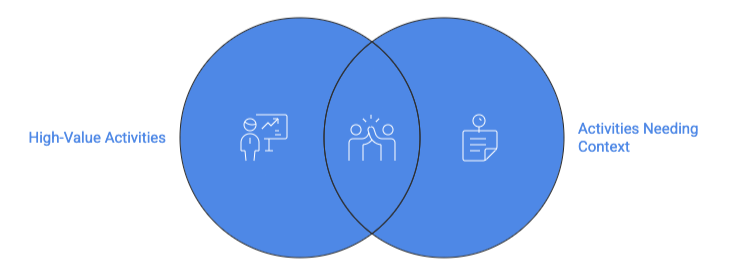
Not all extracurriculars carry equal weight. The decision framework is simple: Does this activity demonstrate a skill, achievement, or quality that the job description specifically requires?
High-Value Activities
Leadership roles in clubs and societies:
Volunteer work with measurable impact:
Professional associations and industry groups:
Competitive achievements:
Activities That Need Context
Athletic participation:
Hobbies on a resume:
Academic activities:
What to Leave Off
How to Identify Transferable Skills in Your Activities
The difference between a weak extracurricular entry and a strong one is specificity about transferable skills.
Common Transferable Skills from Extracurriculars
| Activity Type | Transferable Skills | Relevant For |
|---|---|---|
| Student government | Leadership, public speaking, budget management, conflict resolution | Management roles, client-facing positions |
| Volunteer work | Project coordination, teamwork, cultural competency, empathy | Nonprofit, healthcare, customer service |
| Club treasurer | Financial planning, Excel proficiency, reporting, accountability | Finance, operations, administrative roles |
| Event planning | Logistics management, vendor negotiation, timeline management | Project management, operations, marketing |
| Tutoring/mentoring | Communication, patience, curriculum development, assessment | Education, training, management |
| Fundraising campaigns | Sales, persuasion, relationship building, goal achievement | Sales, business development, marketing |
The Skill Translation Process
Step 1: List what you actually did in the activity
Step 2: Identify the underlying skills
Step 3: Quantify the scope
Step 4: Add the outcome or impact
This approach transforms a basic activity description into evidence of professional capabilities.
Where to Place Extracurricular Activities on Your Resume
Placement depends entirely on your career stage and how much the activities support your candidacy.
For Students and Recent Graduates (0-2 years experience)
Create a dedicated section near the top of your resume, after Education:
EDUCATION
Bachelor of Science in Business Administration
University of Michigan | Graduated May 2023 | GPA: 3.7
LEADERSHIP & ACTIVITIES
President, Michigan Business Association | 2022-2023
- Led 60-member organization focused on connecting students with industry professionals
- Managed $15,000 annual budget and coordinated 8 networking events with 300+ attendees
- Increased membership by 35% through targeted recruitment campaign
Volunteer, Detroit Food Bank | 2023-2025
- Contributed 150+ hours sorting and distributing food to 500+ families monthly
- Trained 12 new volunteers on inventory management and safety protocols
For Early-Career Professionals (3-5 years experience)
Integrate into relevant sections or create a smaller section after Work Experience:
If the activity is highly relevant, include it in your Experience section:
EXPERIENCE
Marketing Coordinator | ABC Company | 2024-Present
- [Professional responsibilities…]
ADDITIONAL EXPERIENCE
Board Member, Young Professionals Network | 2022-Present
- Serve on marketing committee for 500-member professional organization
- Develop social media strategy reaching 10K+ young professionals monthly
For Experienced Professionals (5+ years)
Only include if exceptional or directly relevant:
PROFESSIONAL AFFILIATIONS
- Board of Directors, Tech for Good Nonprofit | 2021-Present
- Mentor, Career Transition Program for Veterans | 2020-Present
Most experienced professionals should prioritize professional experience over extracurriculars unless the activity demonstrates executive-level skills (board service, advisory roles) or fills a specific gap in the target job requirements.
Resume Formatting Best Practices for Extracurriculars
ATS systems scan for specific formatting patterns. Poor formatting means your carefully crafted extracurricular descriptions might never reach human eyes.
Section Headers That Work
Use clear, standard headers:
Avoid creative headers that confuse ATS:
Entry Format
Follow the same structure as your work experience:
[Role/Position], [Organization Name] | [Dates]
- Achievement-focused bullet point with metrics
- Another bullet demonstrating relevant skills
- Third bullet showing impact or outcome
Example:
VOLUNTEER EXPERIENCE
Volunteer Coordinator
Habitat for Humanity | May 2025 – Present
- Recruited and scheduled 30+ volunteers monthly for residential construction projects
- Managed tool inventory and supply ordering, reducing waste by 25% through improved tracking
- Trained 50+ new volunteers on safety protocols, maintaining a zero-incident record
Treasurer
Local Toastmasters Chapter | December 2024 – April 2025
- Managed an $8,000 annual budget for a 45-member public speaking organization
- Reduced operational costs by 15% through vendor renegotiation and digital transition
- Prepared quarterly financial reports for board review and member transparency
Bullet Point Formula
Weak: “Member of marketing club”
Strong: “Active member of Marketing Association, attending 12 professional development workshops on digital strategy and analytics”
Stronger: “Marketing Association member who led 3-person team in developing social media campaign that increased event attendance by 45%”
The pattern: [Action verb] + [what you did] + [quantifiable scope/impact]
An ATS resume checker can provide you with a list of job specific keywords that you should include in your resume. Additionally, some of these tools will also provide you with an ATS score that evaluates your resume on different parameters like formatting, keyword frequency etc. that some ATS algorithms use for scoring your resume.
Common Mistakes When Listing Extracurricular Activities
Mistake #1: Including Irrelevant Activities
❌ Problem: Listing every club you’ve ever joined, regardless of relevance to the target role.
✅ Fix: Apply the “so what?” test. If you can’t connect the activity to a skill the employer wants, cut it.
Mistake #2: Vague Descriptions
❌ Problem: “Member of student government”
✅ Fix: “Student Government Representative for College of Engineering, advocating for 2,000+ students and securing $50,000 in additional funding for lab equipment”
Mistake #3: Outdated Activities
❌ Problem: Listing high school activities when you’re 10 years into your career.
✅ Fix: Remove anything more than 5-7 years old unless it’s exceptional (e.g., Olympic athlete, published author).
Mistake #4: No Metrics or Outcomes
❌ Problem: “Volunteered at animal shelter”
✅ Fix: “Volunteered 8 hours weekly at animal shelter, assisting with care of 30+ animals and supporting 15 successful adoptions”
Mistake #5: Taking Up Too Much Space
Problem: Half a page dedicated to extracurriculars when you have 10 years of professional experience.
✅ Fix: Limit to 2-4 lines maximum, or eliminate entirely if your professional experience is strong.
Resume Examples: Extracurriculars Done Right
Example 1: Recent Graduate
Leadership & Activities
Vice President
Finance Club | March 2025 – January 2026
- Coordinated 6 industry speaker events with professionals from Goldman Sachs, JP Morgan, and BlackRock
- Managed club operations and communications for 80+ members
- Increased corporate sponsorship by 60% through targeted outreach to 15 financial firms
Volunteer Tax Preparer
VITA Program | December 2024 – February 2025
- Completed IRS certification to provide free tax preparation for low-income families
- Prepared 45+ tax returns, securing average refunds of $2,100 for underserved community members
💡 Why it works: Demonstrates leadership, financial skills, and community commitment. All relevant for entry-level finance roles.
Example 2: Career Changer (Teacher to Corporate Trainer)
Relevant Activities
Workshop Facilitator
Professional Development Institute | May 2025 – Present
- Designed and delivered 4-hour workshops on effective communication for 20–30 adult learners
- Achieved a 4.8/5.0 average satisfaction rating across 8 workshops with 150+ participants
- Adapted curriculum for virtual delivery while maintaining engagement through interactive exercises
💡 Why it works: Bridges the gap from classroom teaching to corporate training by demonstrating adult learning facilitation.
Example 3: Mid-Career Professional
Board Service & Affiliations
Board Member
TechWomen Nonprofit | March 2025 – Present
- Served on the fundraising committee, contributing to a 40% increase in annual donations ($200K to $280K)
Mentor
Big Brothers Big Sisters | December 2024 – February 2025
- Provided ongoing mentorship to a high school student interested in STEM careers
💡 Why it works: Brief, demonstrates leadership and values alignment without overshadowing 15 years of professional experience.
Time Saving Tip
Reworking your resume for every job posting can consume 40–60 minutes each time. When you’re submitting applications in bulk, that quickly becomes overwhelming. AI resume builders like Upplai can scan job descriptions and help you select the most appropriate extracurricular activities (if any) and align the language to outcome based verbiage that hiring teams are seeking, without exaggeration or losing your personal tone.
Quick Checklist: Before You Add Extracurriculars
Use this checklist to evaluate whether an activity belongs on your resume:
If you answered “no” to more than two questions, reconsider including that activity.
Want to see complete resumes with extracurriculars in context? Explore our library of 20 ATS resume examples across different industries and career stages.