


TL;DR
When it comes to writing a resume, one of the first decisions you have to make is which format to use. And the two most talked about formats are the functional resume and the reverse chronological resume.
At first glance, they might seem similar. Both have the same basic sections. But the way they are organized is very different, and that difference can affect whether your resume gets noticed or not.
In this guide, we break down what each format is, how they compare, and which one is the right choice for your situation.
What is a Functional Resume?
A functional resume emphasizes skills. Instead of leading with where you have worked, it leads with what you can do.
The work history section in a functional resume is usually kept brief. Job titles, company names, and dates are still included, but they are not the main focus. The idea is to show the hiring manager your abilities first, before they look at your timeline.
A standard functional resume includes these sections:
This format is less common than the reverse chronological format, but it can work well in specific situations, which we will cover later in this guide.
Example:
SKILLS SUMMARY
Project Management: Led a team of 8 to deliver a product launch two weeks ahead of schedule. Managed budgets of up to $200K across multiple projects.
Content Strategy: Developed and executed content plans that grew organic traffic by 120% in 12 months.
WORK EXPERIENCE
Marketing Consultant | Self-employed | 2019 to Present
Marketing Executive | ABC Agency | 2016 to 2019
What is a Reverse Chronological Resume?
A reverse chronological resume emphasizes work experience, starting with your most recent role and moving backward. It is the most widely used resume format and the one most recruiters expect to see.
A standard reverse chronological resume includes these sections:
This format makes it easy for hiring managers to see where you are in your career right now, how you got there, and whether your background is a good fit for the role.
Example:
Copied!WORK EXPERIENCE Senior Marketing Manager TechCorp Solutions | San Francisco, CA | March 2024 – Present • [Achievement bullet point] • [Achievement bullet point] • [Achievement bullet point] Marketing Manager StartupXYZ | Austin, TX | June 2023 – February 2024 • [Achievement bullet point] • [Achievement bullet point]
Key Differences Between Functional and Reverse Chronological Resume
| Feature | Functional Resume | Reverse Chronological Resume |
|---|---|---|
| Primary Focus | Skills, abilities, and transferable competencies | Work history, career progression, and dates of employment |
| Structure | Starts with a skills summary, followed by a brief work history | Starts with work experience listed newest first |
| Work Experience | De-emphasized, often without specific dates or detailed responsibilities | Emphasized, with dates, company names, titles, and achievements |
| Ideal For | Career changers, people with employment gaps, and recent graduates with limited experience | Professionals with a consistent career path and relevant recent experience |
| Advantages | Highlights transferable skills, draws attention away from employment gaps | Easy to read, preferred by recruiters and ATS systems, and shows career growth |
| Disadvantages | Often viewed with suspicion by recruiters, less ATS-friendly | Highlights employment gaps, may not suit career changers |
| Recruiter Preference | Generally less preferred | Highly preferred |
| ATS Compatibility | Less compatible | Highly compatible |
Each format has its place, but the right choice depends on where you are in your career and what you want the hiring manager to notice first.
Functional Resumes Focus on Skills, While Chronological Resumes Focus on Work History
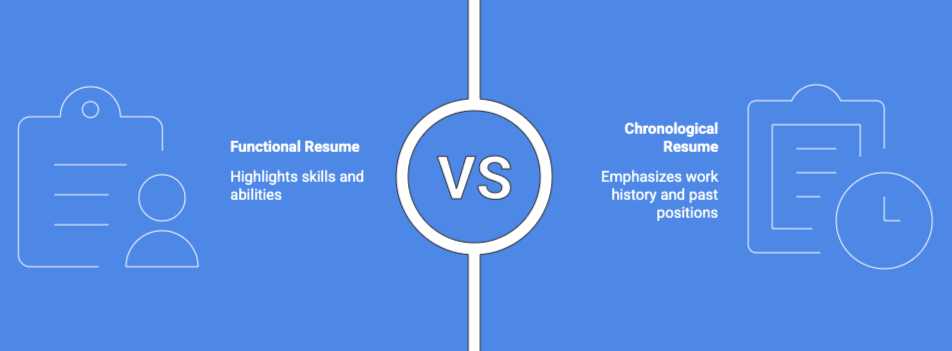
The biggest difference between functional and chronological resumes is what they emphasize.
A functional resume highlights your skills and abilities and is built around what you can do. A reverse chronological resume emphasizes your work history and past positions.
With a functional resume, the skills section does most of the heavy lifting. You group your abilities into categories and back them up with short examples. The work history section is still there, but it takes a back seat.
With a reverse chronological resume, your work history is the main focus. Each role gets its own section with bullet points that show what you achieved in that position. Your skills are still listed, but they support your experience rather than replace it.
For example, if you are changing careers, a functional resume lets you lead with transferable skills like communication or project management, rather than a work history that may not seem directly relevant to the new field. On the other hand, if you are a marketing manager applying for a senior marketing role, a reverse chronological resume works better because your recent experience is exactly what the hiring manager wants to see first.
Functional Resumes are Ideal for Freelancers; Chronological Resumes are Ideal for Full-time Employees
If you have worked as a freelancer or consultant, a functional resume can work in your favor. Instead of listing a series of short contracts that might look like gaps on a timeline, you can group your work under skill categories and let your abilities speak for themselves.
For full-time employees with a steady work history, the reverse chronological format is the better choice. It gives hiring managers a clear picture of your career path and shows that you have built your experience over time in a consistent way.
That said, this is not a hard rule. A full-time employee who is changing careers might benefit from a functional format, and a freelancer with long-term contracts might do just fine with a reverse chronological resume.
Recruiters Prefer Chronological Over Functional Resumes
If you ask most recruiters which format they prefer between functional and chronological, the answer is almost always the reverse chronological resume. The reason is simple: it is easier for recruiters to scan and verify the candidate’s experience.
Here is why:
This does not mean that you should never use a functional resume. Based on some specific situations, functional resumes work better than reverse chronological resumes.
Chronological Resumes are More ATS-Friendly than Functional
Most companies today use Applicant Tracking Systems (ATS) to rank and screen resumes. And when it comes to getting past these systems, the reverse chronological format has a clear advantage over a functional resume:
Functional Resumes Downplay Employment Gaps, While Chronological Resumes Make Employment Gaps More Visible
One of the main reasons people choose a functional resume is to draw attention away from gaps in their work history. Because the focus is on skills rather than a timeline, gaps are less obvious at first glance.
With a reverse chronological resume, employment gaps are easier to spot. The dates are right there, and any break in your timeline stands out.
That said, gaps in your resume are not as big a deal as they used to be. Many recruiters understand that people take time off for many reasons, whether it is for health, family, further education, or personal circumstances. That said, attitudes toward gaps can still vary depending on your industry, country, and the seniority of the role you are applying for.
Overall, being upfront about any gaps in your cover letter or interview tends to work in your favor, regardless of which format you choose.
Functional Resumes are More Flexible than Chronological
A functional resume gives you more control than a reverse chronological one over what the hiring manager sees first. You can shape the narrative around your strengths and tailor your skills section to match the job description closely, regardless of your work history.
On the other hand, a reverse chronological resume is more structured compared to a functional one. You list your roles in order, and the format does not leave much room to rearrange things.
The flexibility of a functional resume can be an advantage:
But it comes with a trade-off:
The more you move away from the standard format, the more likely it is that recruiters and ATS systems will struggle with it.
Reverse Chronological vs Functional Resumes: When to Use Which
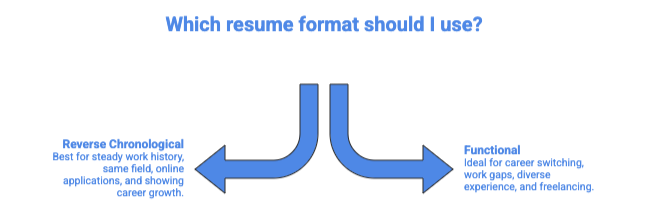
Use a reverse chronological resume if:
Use a functional resume if:
If you are still not sure, go with the reverse chronological format. It is what most recruiters expect, and it gives you the best chance of getting past ATS filters.
Optimize Your Resume with Upplai
If the right format for you is reverse chronological, Upplai can help you streamline the process. Here is what makes it different: