
TL;DR
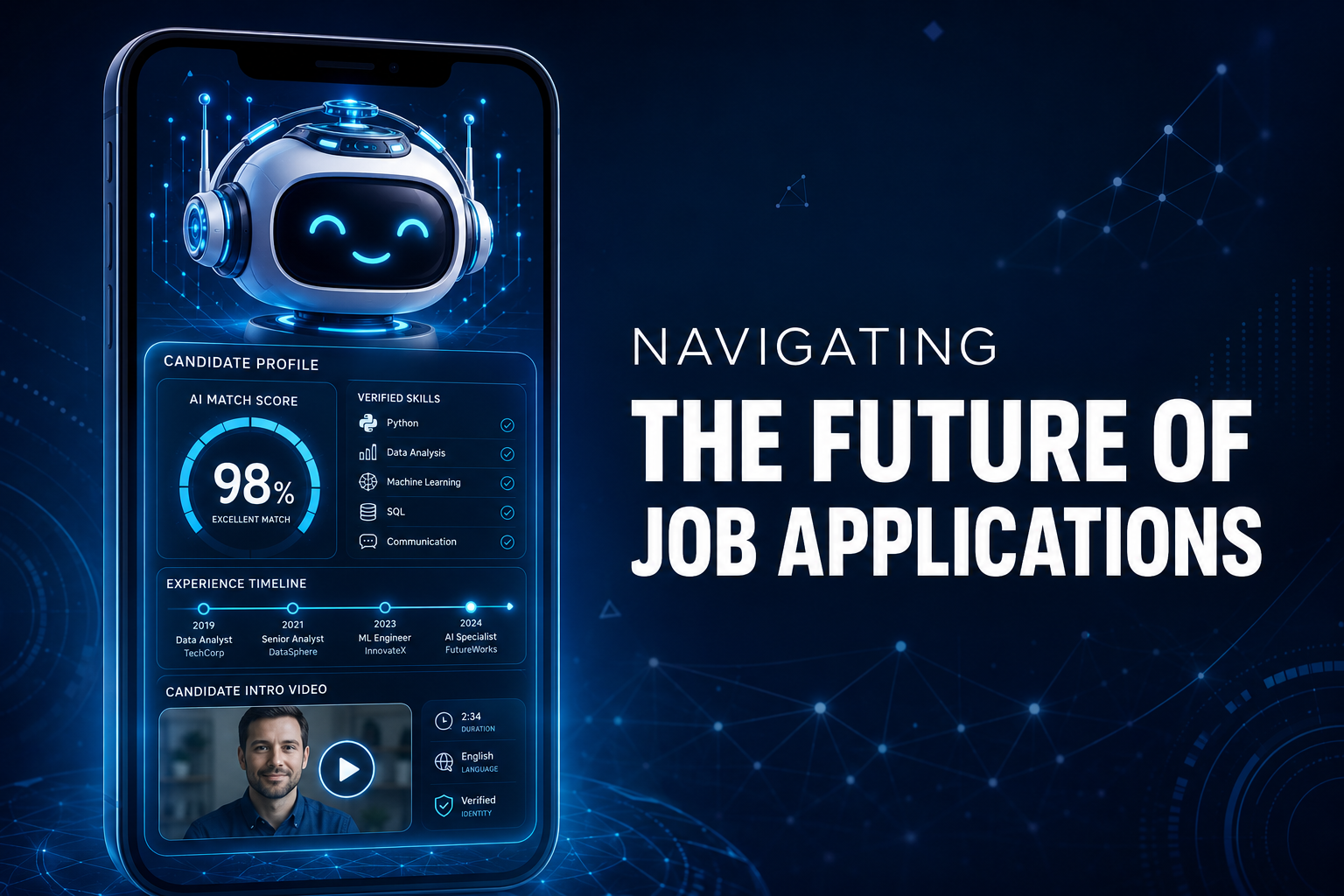
If you’ve sent out a job application in the last year or two, chances are you’ve already brushed shoulders with artificial intelligence – even if you didn’t realize it.
That polished bullet point you tweaked with ChatGPT? AI. The recruiter chatbot that asked about your experience before a human ever saw your name? Also AI. The reason your resume got picked (or quietly rejected) before lunch? You guessed it.
Job applications used to be a fairly predictable ritual. You’d write a cover letter, attach a PDF, hit send, and then refresh your inbox until your soul left your body.

That ritual still exists, technically. But under the hood, both sides of the table – candidates and recruiters – are using AI to move faster, sift smarter, and (in theory) make better decisions. The result is a hiring landscape that looks familiar on the surface but works very differently underneath.
Whether you’re applying for your first internship or you’re a senior professional weighing your next move, understanding how AI is reshaping the process is no longer optional. Let’s break it down.
The Old Way Was Already Broken
Before we talk about AI, let’s be honest about why this shift was inevitable. The traditional hiring funnel had a few well-known cracks:
It was inefficient for employers and demoralizing for everyone applying. Something had to give. AI didn’t invent the chaos, but it has stepped in to manage it.
How AI Is Changing the Resume Side of Things
Let’s start with you, the candidate. The way job applications get built has changed dramatically in just the last couple of years.
1. AI Resume Builders Are the New Default
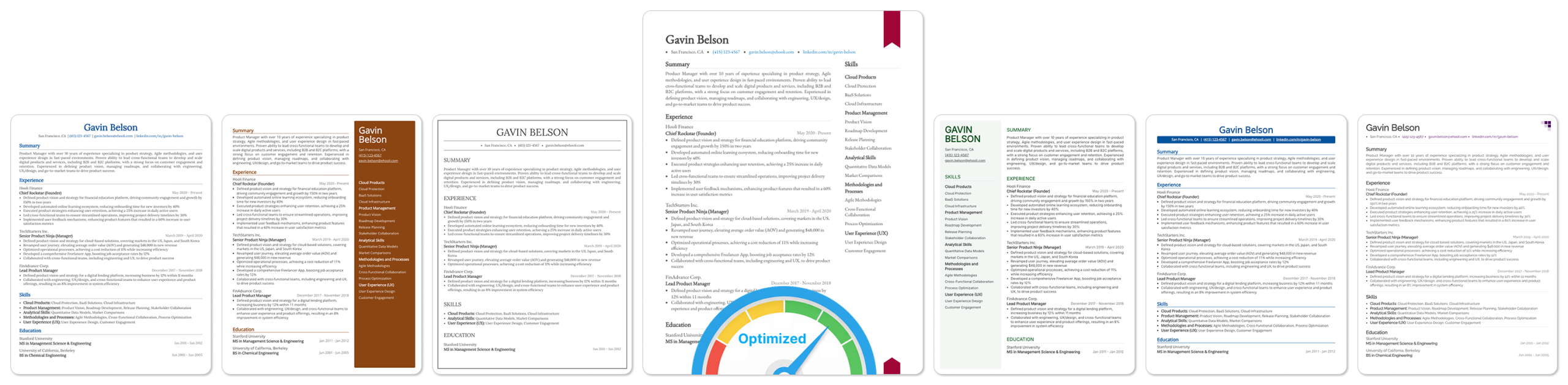
AI resume builders like Upplai, Teal, Rezi, Kickresume, and also LLMs like ChatGPT and Claude can now turn a messy list of past responsibilities into a tightly worded, achievement-focused resume in minutes. Instead of staring at a blank page, wondering how to make “answered emails” sound impressive, you can prompt an AI to rewrite it as “Managed inbound communications for a 12-person team, reducing response time by 40%.”
For beginners, this is huge. The blank page is no longer an obstacle. For professionals, it’s a way to reframe years of experience for a specific role without rewriting the whole document from scratch.
The catch? Everyone has access to the same tools. So if you copy-paste AI output without editing, your resume ends up sounding like every other AI-generated resume in the pile. Which brings us to the next shift.
2. ATS Optimization Is Now an AI Game
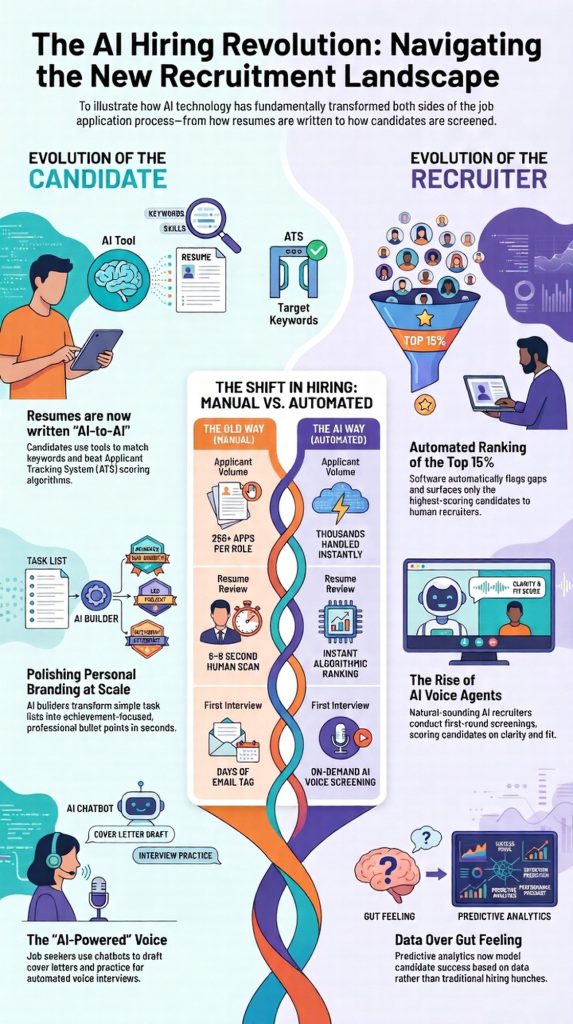
Applicant Tracking Systems (ATS) – the software that scans resumes before a human ever sees them – have been around for years. What’s new is that AI is now writing resumes specifically to beat AI.
People feed the job description into a model and ask it to identify which keywords, phrases, and skills should be mirrored back. Tools like Jobscan and Resumeworded literally score how well your resume matches a posting. Your job application now lives or dies by an algorithm match score before a recruiter ever sees your face.
This is great news if you’ve been ignored because your resume used “client relations” instead of “customer success.” It’s less great if you don’t know the game is being played.
3. Personal Branding Has Gotten Easier (And Louder)
AI is also helping candidates polish LinkedIn summaries, write cold outreach messages, generate personalized cover letters at scale, and even spin up portfolio sites with a single prompt. The barrier to looking like a serious candidate has dropped significantly.
That’s good and bad.
✔️Good: more people can compete on substance, not formatting.
❌ Bad: recruiters now have to wade through a sea of suspiciously similar cover letters that all open with “I’m thrilled to apply for this opportunity.”
How AI Is Changing Recruitment
Now flip the table. What does the hiring side look like?
1. AI-Powered Screening Happens Before Anyone Says Hello
The first round of cuts in most modern job applications doesn’t involve a human at all. AI screening tools rank candidates by how well their experience matches the role, flag obvious gaps, and surface the top 10–15% to a recruiter. Some go further and analyze writing samples, GitHub repos, or test submissions automatically.
For employers, it’s a sanity-saver. For candidates, it means the first impression is being made on software, not a person, which is exactly why optimizing for ATS now matters so much.
2. AI Recruiters and Voice Agents Are Conducting Interviews
This is the part that surprises people. AI isn’t just reading resumes anymore – it’s holding actual conversations.
Voice-based AI recruiter tools can now run first-round screenings entirely on their own. They’ll call you (or you’ll call them), ask competency questions, follow up based on your answers, and pass a structured summary to a human recruiter. The voice sounds natural, the conversation flows, and at the end, you get scored on clarity, relevance, and fit.
For high-volume hiring – think retail, customer support, sales, even early-stage tech roles – this dramatically cuts the time-to-interview from two weeks to a few hours. Candidates get to schedule their own slot, talk through their experience, and move forward without playing email tag.
It’s not perfect. AI interviewers can’t read body language as well as a human, and they sometimes miss nuance. But for the first filter, they’re already outperforming junior recruiters on consistency.
3. Predictive Analytics Are Replacing Gut Feelings
Hiring managers used to make decisions based on a 30-minute chat and a hunch. AI is now layering data on top: how have past hires with similar profiles performed? How long do they stay? What predicts success in this specific role?
Companies like Eightfold, HireVue, and Pymetrics build models around these questions. Whether the predictions are fair is a separate (and important) conversation – but the trend is clear. Decisions are getting more data-driven, whether candidates can see the data or not.
4. Bias Detection Is Built Into the Process (Sometimes)
One of the more hopeful uses of AI in recruitment is bias auditing. Modern hiring platforms can flag if a job description uses language that skews male, if a screening process disproportionately filters out certain groups, or if specific interviewers consistently rate candidates differently.
Done well, this is a meaningful improvement. Done poorly, it can encode existing biases at scale. The technology is genuinely useful – and genuinely double-edged.
The New Reality: AI vs. AI
Here’s where things get philosophical. Job applications are increasingly an AI-on-AI conversation. You use AI to write your resume. The company uses AI to read it. You use AI to prep for the interview. The company uses AI to conduct it. Somewhere in there, two humans eventually meet for a conversation that decides the offer.
That’s not a dystopia – it’s just the new shape of efficiency. But it does change what stands out. The candidates who win in this environment aren’t necessarily the ones who use the most AI. They’re the ones who use AI to handle the boring parts and then show up as a sharp, specific human in the moments that actually matter.
What This Means for Job Seekers
Whether you’re entering the job market or already deep into your career, here’s how to adapt:
What This Means for Recruiters and Hiring Managers
If you’re on the hiring side, the temptation is to automate everything and move on. Resist it.
Use AI for volume, humans for judgment. AI is brilliant at filtering 5,000 applications down to 50. It’s still mediocre at deciding which 5 of those 50 should get an offer.
Be transparent with candidates. If part of the job application process is AI-driven, say so. Candidates increasingly expect to know whether they’re talking to a person or a model, and trust collapses fast when they find out the wrong way.
Audit your tools. AI hiring tools are only as good as the data they were trained on. Regularly check for bias, edge cases, and false negatives – especially for roles where the “ideal candidate” profile might be outdated.
Don’t lose the human touch in the final stages. The fastest way to lose a great hire is to make the entire process feel transactional. Use AI to get to “yes” faster – then bring the warmth back in.
The Common Pitfalls (And How to Avoid Them)
A few traps that come up again and again in modern job applications:
The Human Element Hasn’t Gone Anywhere
Here’s the part that gets lost in the hype: AI hasn’t replaced the human side of hiring. It’s just moved it to a different point in the process.
Final-round interviews are more human than ever, because everyone knows the AI rounds got you there. Cultural fit, gut chemistry, how you handle a tough question – those are the moments that decide offers. The candidates who treat AI screening as a chore to survive and then bring real energy to the human stages tend to do well.
Same for hiring managers. The best ones use AI to get to better candidates, then spend their saved time actually getting to know those candidates. The worst use of AI is to never have to talk to anyone, and then wonder why their hires don’t stick.
Where Job Applications Go From Here
A few predictions for the next couple of years:
Some of this sounds great. Some of it sounds exhausting. Both reactions are valid.
Get the Best Out of AI, but Keep Your Unique Human Touch
Job applications aren’t dying. They’re evolving – fast. The fundamentals haven’t changed: you still need to communicate your value, show up well, and convince someone you’ll be great at the work. What’s changed is the layer of software sitting between you and the decision-maker.
The good news is that this layer is getting more transparent and easier to work with every month. AI resume tools are accessible to anyone with a browser. AI interview prep is free. AI recruiters are starting to give candidates feedback that human recruiters never bothered to. The job application process is, oddly enough, becoming more honest – not less.
So treat AI as a co-pilot, not a crutch. Get good at the parts that still require a real person – the storytelling, the questions you ask, the way you handle the unexpected. That’s the part no model has cracked yet. And it’s where the offers still get made.
FAQs