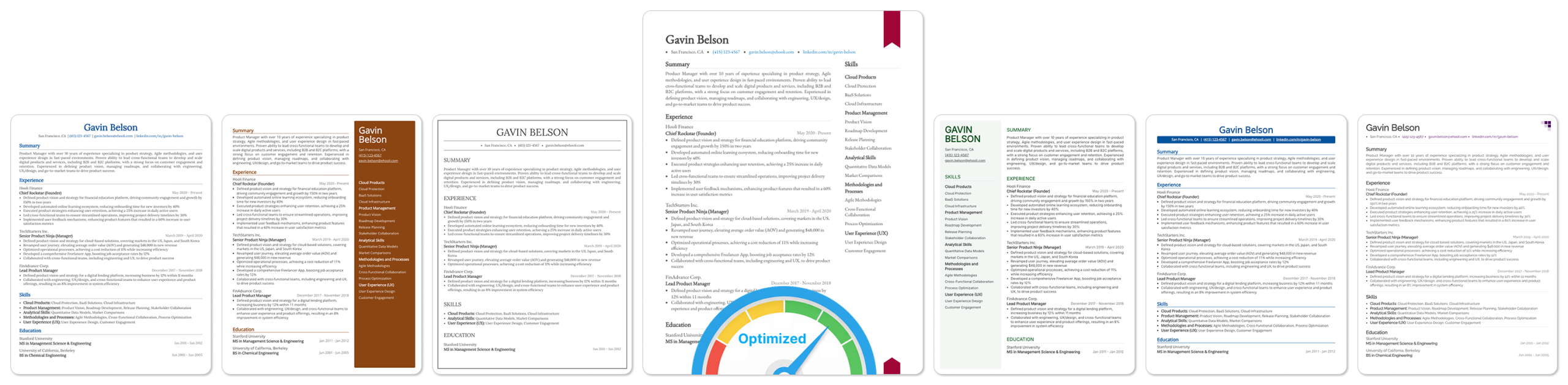


TL;DR
You have probably spent hours on your resume.
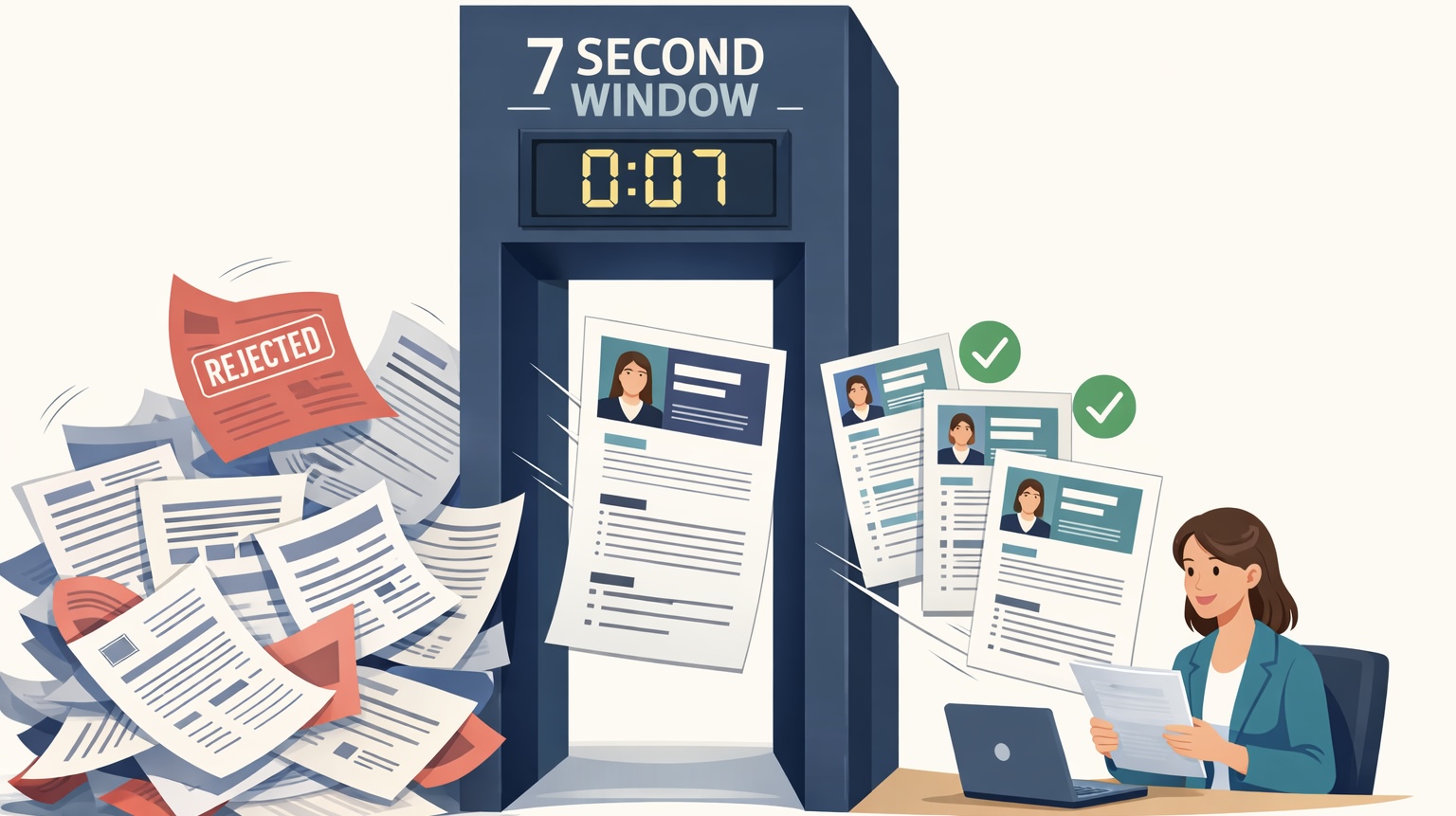
Picking the right words, getting the formatting just right, making sure everything is in order, and yet, the recruiter reading it will decide in about 7 seconds whether it is worth a closer look.
That is not a lot of time. But it is enough if your resume is set up the right way.
In this guide, we walk you through how to get your resume noticed by employers and what you can do to make sure your resume does not get passed over.
Step 01: Optimize the First Eye Glance
The first thing a recruiter does when they open your resume is not read it. They glance at it. In that split second, they are picking up on things like layout, structure, and whether it looks easy to read.
If your resume looks cluttered, hard to follow, or just visually overwhelming, most recruiters will move on before they have read a single word. First impressions are not just for interviews.
The good news is that this is one of the easiest things to fix. Here is what a good first glance looks like:
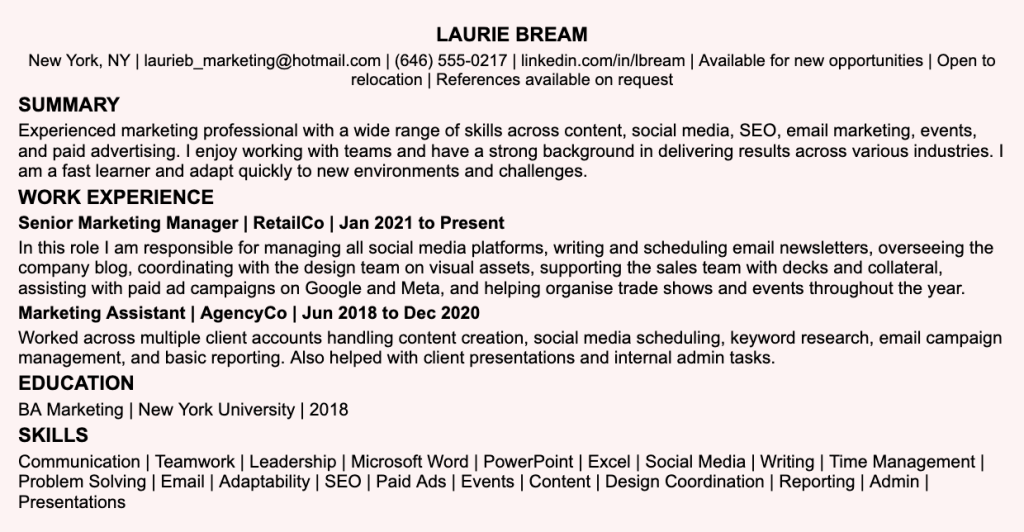
❌ Before – Hard to glance at
✅ After – Clean and easy to scan at a glance
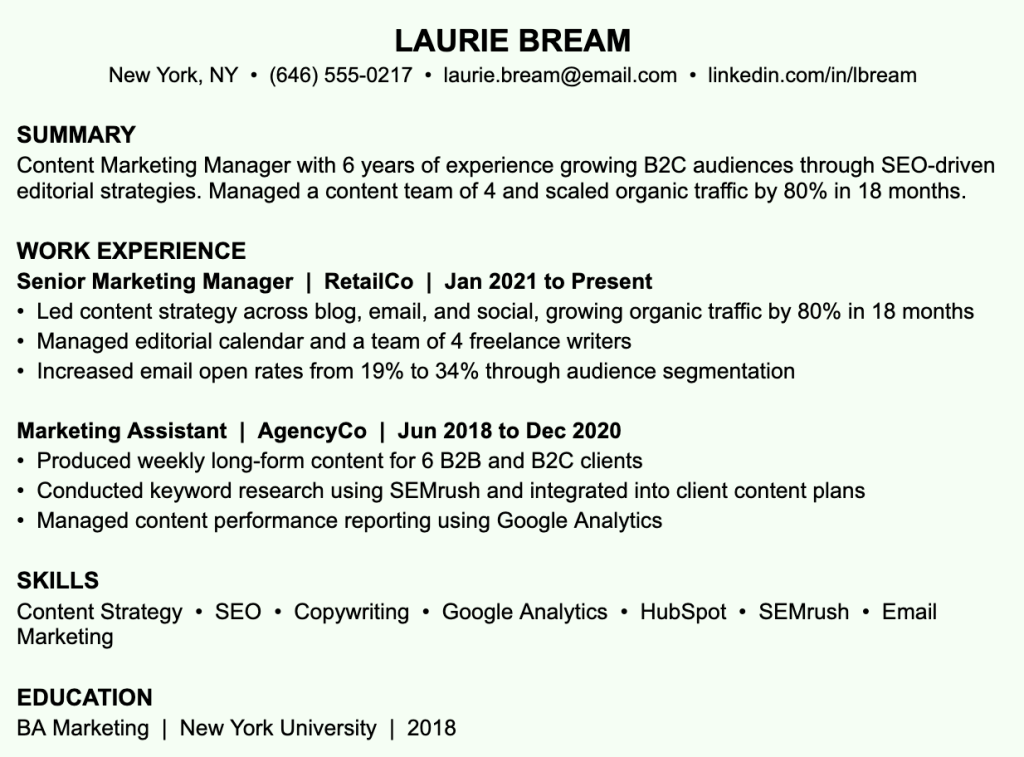
If your resume passes the glance test, the recruiter is much more likely to slow down and actually read it.
Resumes with heavy formatting, too much text, or unusual layouts often get skipped entirely, not because the experience is bad, but because they are too hard to scan.
Step 02: Prime the Top Third of Your Resume
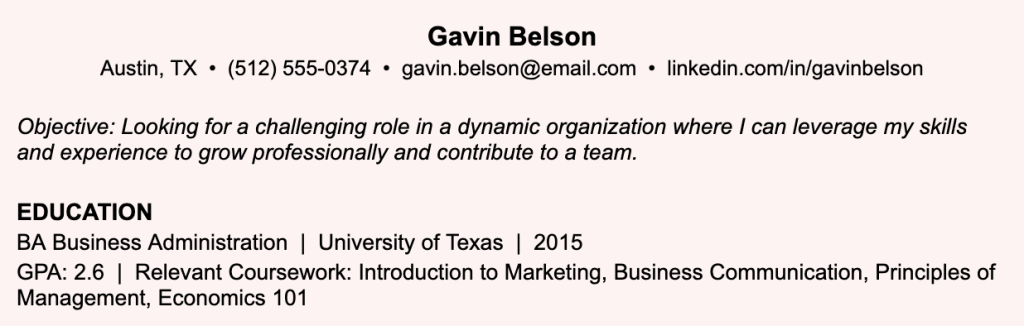
Think of the top third of your resume as prime real estate. It is the first thing a recruiter sees before they scroll or flip the page. If it does not grab their attention, the rest of it does not matter.
For example. your job title, most recent role, and a summary that needs to make an immediate impression.
These three things together should give a recruiter a clear picture of who you are and what you bring to the table within a few seconds. In both examples below, Gavin is applying for a Senior Product Manager role at a B2B SaaS company.
❌ Before – Wrong order, wastes prime real estate
✅ After – Strong top third that earns a second look
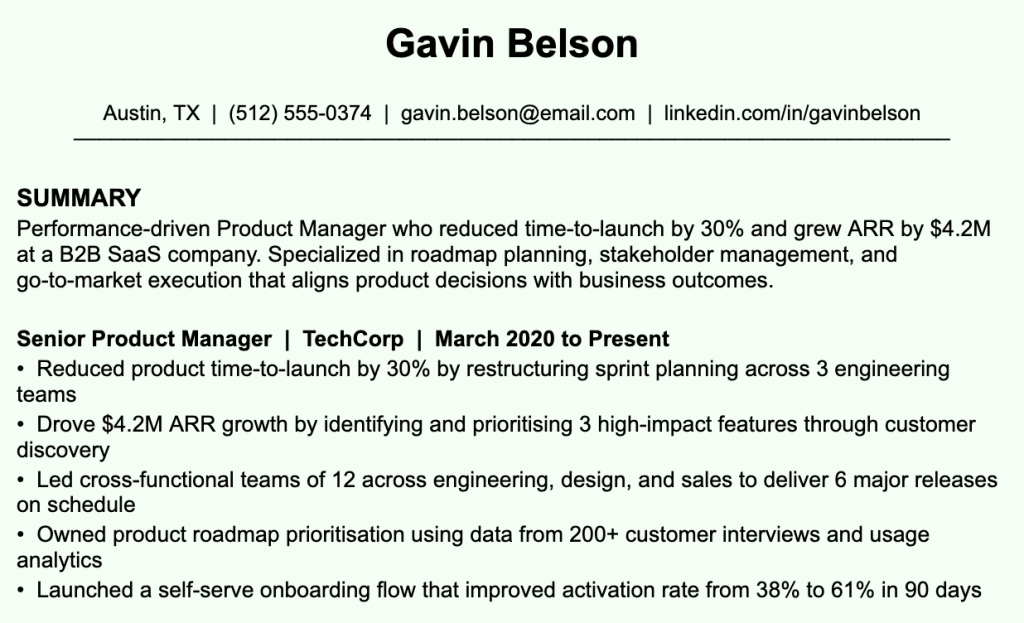
This tells the recruiter exactly who Gavin is, what he is good at, and what he has achieved, all before they have even looked at the rest of the resume.
A lot of people fill the top third with an objective statement that says something generic like “looking for a challenging role in a dynamic organization.” This tells the recruiter nothing and wastes the most valuable space on your resume.
Step 03: Make the Pages Easy to Scan
Recruiters do not read resumes from top to bottom on the first pass. They scan for specific things, like your most recent job title, the company you work at, and whether your experience matches what they are looking for.
If your resume is a wall of text with no clear structure, those things are hard to find. And if a recruiter cannot find what they need quickly, they will move on.
Here is what makes a resume easy to scan:
❌ Before

✅ After

Resumes that use long paragraphs instead of bullet points, or cram everything onto one page without any breathing room, are much harder to scan. Even a strong professional experience can get overlooked if it is buried in a wall of text.
Step 04: Use a Simple and ATS-Friendly Resume Design
A lot of people think a creative or visually impressive resume will help them stand out. In most cases, it does the opposite.
Most companies use ATS software to screen resumes before a human sees them. These systems are designed to read text in a specific way.
When you use tables, headers, footers, text boxes, graphics, or unusual fonts, the ATS can misread or completely miss important information. Your resume might get filtered out before anyone has even looked at it.
As far as resumes go, simple is better. Here is what an ATS-friendly resume looks like:
❌ Before – Not ATS-friendly: profile photo + table layout
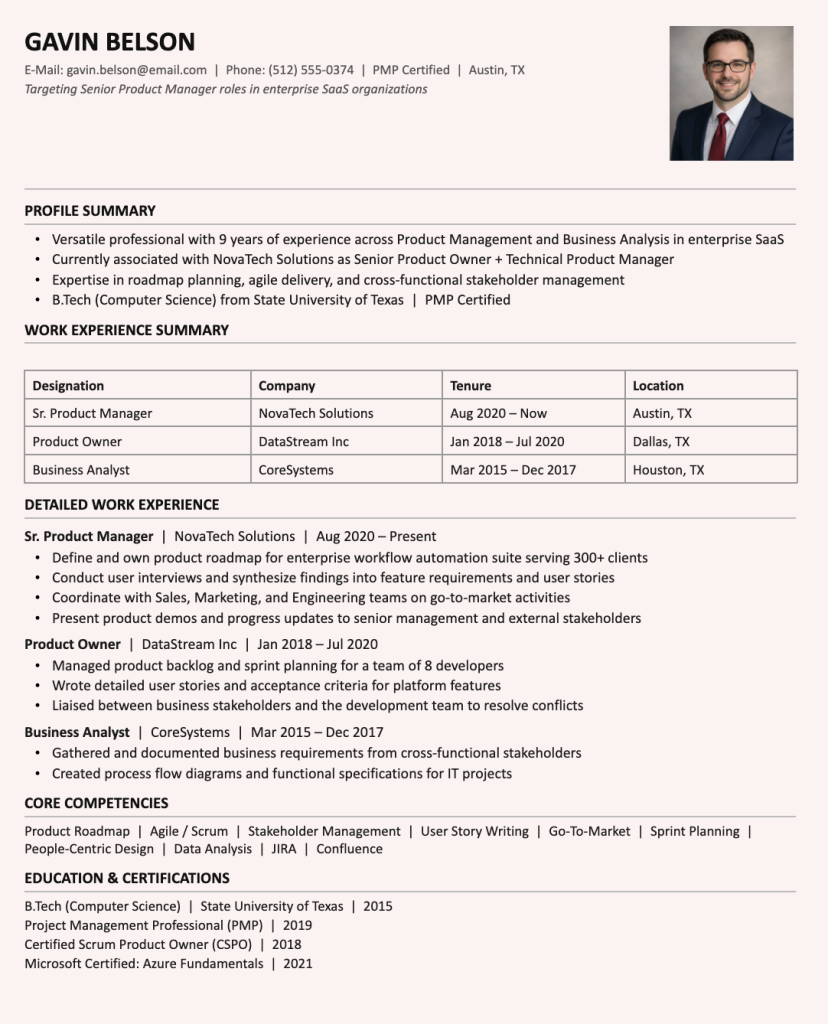
A resume that looks like this might seem organized to the human eye, but an ATS cannot read tables and may not process the photo correctly. The result is that job titles, companies, and dates inside the table get scrambled or missed entirely, and your application gets filtered out before any recruiter sees it.
For a full example of what an ATS-friendly resume looks like in practice, see the complete resume example in the next step.
Step 05: Profile for the Role Instead of Listing Everything
One of the most common resume mistakes is treating your resume like a complete record of everything you have ever done. It is not.
Your resume is a marketing document, and it should be shaped around the specific role you are applying for.
When a recruiter opens your resume, they are looking for evidence that you can do the job you are applying for. If your resume is a long list of every responsibility you have ever had, they have to do a lot of work to figure out if you are a good fit. Most will not bother.
So, that’s why you must tailor your resume for every job you apply for.
Tailoring your resume does not mean rewriting it from scratch every time. Here is what it actually involves:
A generic resume that lists everything equally sends the message that you do not have the right experience for the role.
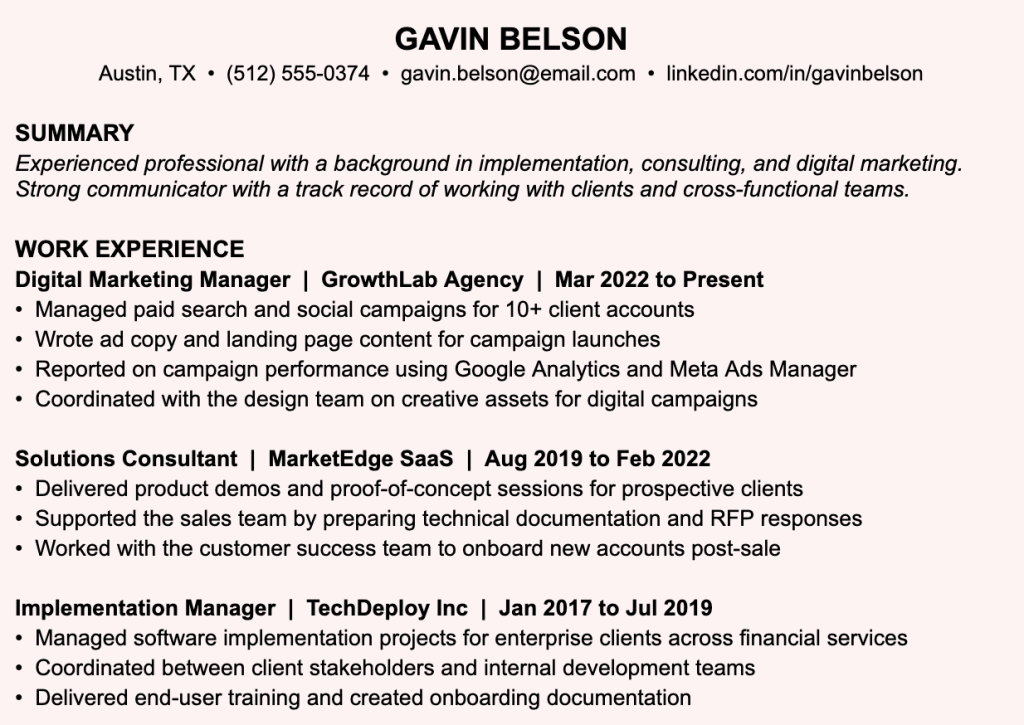
Below is the example of a generic vs. a tailored resume. Both candidates are applying for the same role: Director of Product Marketing at a B2B SaaS company.
❌ Before – Gavin Belson: mismatched experience, not tailored for the role
✅ After – Laurie Bream: clear progression toward Director of Product Marketing
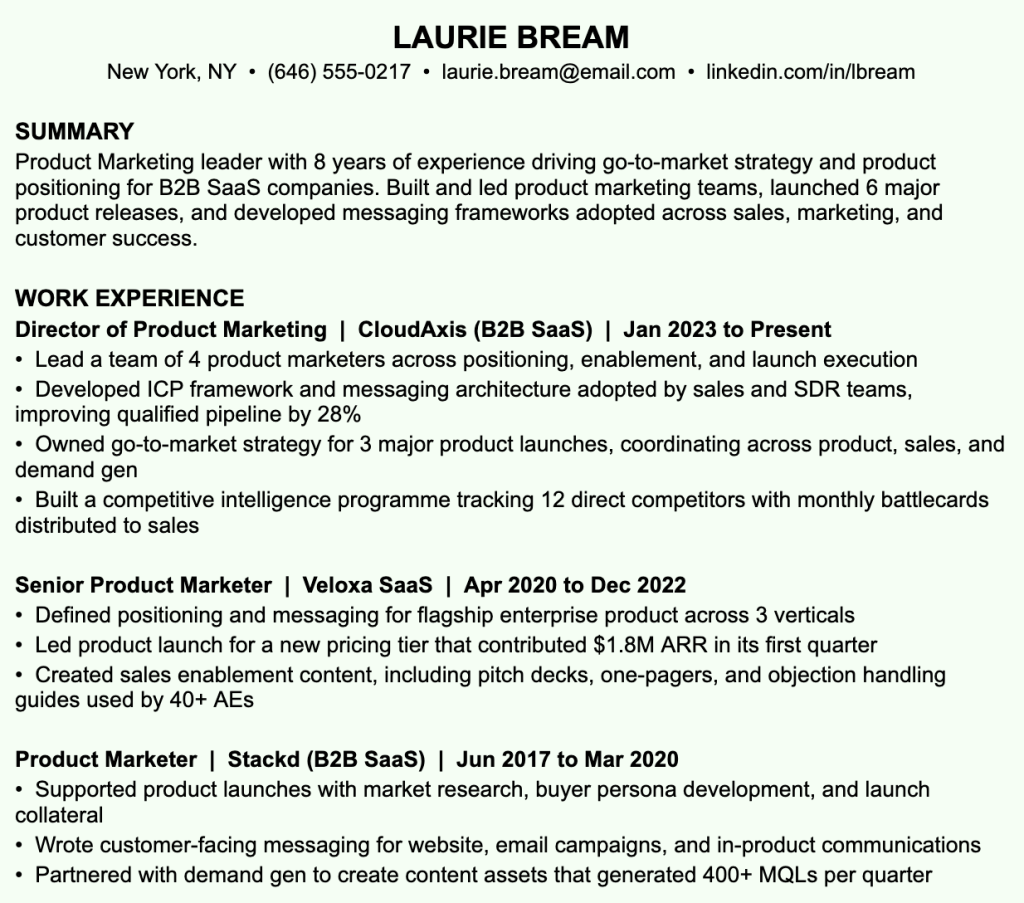
Why Laurie’s resume works and Gavin’s doesn’t
Gavin’s background jumps between digital marketing, consulting, and implementation. None of it maps clearly to product marketing. Laurie’s resume, on the other hand, makes the fit obvious from the first line. Every role and every bullet point connect directly to what the job requires.
Step 06: Use Common Industry Terminology
Every industry has its own terminology. The words and phrases that recruiters and ATS systems look for are usually right there in the job description.
If your resume does not use that language, it can look like you are not familiar with the field.
This does not mean that you should stuff your resume with industry jargon. It means using the same terminology that the industry uses so that your experience is immediately recognizable.
❌ Before

✅ After

Using vague or informal language where specific industry terms are expected can make your resume look less credible. It can also cause ATS systems to miss your relevant experience entirely because the keywords do not match.
Step 07: Show Results Instead of Responsibilities
Most resumes just list what you were supposed to do in a role. But honestly, that is true for everyone who has held that position. What recruiters actually want to know is what you did with it.
❌ Before

✅ After

The second one tells the recruiter exactly what you did and what came out of it.
A simple way to check if your bullet point is strong enough is to ask: does it say what I did AND what came out of it? If it only answers one of those, it needs a number or an outcome added to it.
This matters because recruiters go through dozens of resumes that all say the same things. But when your bullet points include real numbers and outcomes, they give the recruiter something concrete to hold onto.
It also signals that you were not just showing up, you were paying attention to the impact of your work. Resumes without results do not just look generic; they leave the recruiter with no reason to pick you over someone else.
Step 08: Use Strong Action Verbs
The first word of each bullet point matters because recruiters usually scan resumes very quickly. When they look through a list of bullet points, their eyes tend to catch the first word before anything else. That word immediately signals what role you played in the work being described. When a bullet point starts with a strong action verb, it suggests that you were directly responsible for the work.
Words like “helped,” “assisted,” or “worked on” make your contribution sound passive and hard to define. Recruiters prefer to see clear ownership, and weak openers can undersell even impressive experience.
Here are some examples of weak verbs and stronger alternatives:
❌ Before

✅ After

Strong action verbs also make your resume easier to scan. Words like “Led,” “Built,” or “Automated” immediately tell a recruiter that you took initiative and delivered something meaningful.
Step 09: Explain Employment Gaps or Short Roles
Employment gaps and short stints at companies are not the deal breakers they used to be. Most recruiters understand that careers are not always straightforward. What they do not like is being left to guess.
If you have a longer than 6-month gap in your work history, a brief note explaining it goes a long way. The same goes for short roles. If you leave after 6 months, a one-line explanation in your cover letter or even in the role description itself can prevent unnecessary questions.
❌ Before – Unexplained gap in work experience
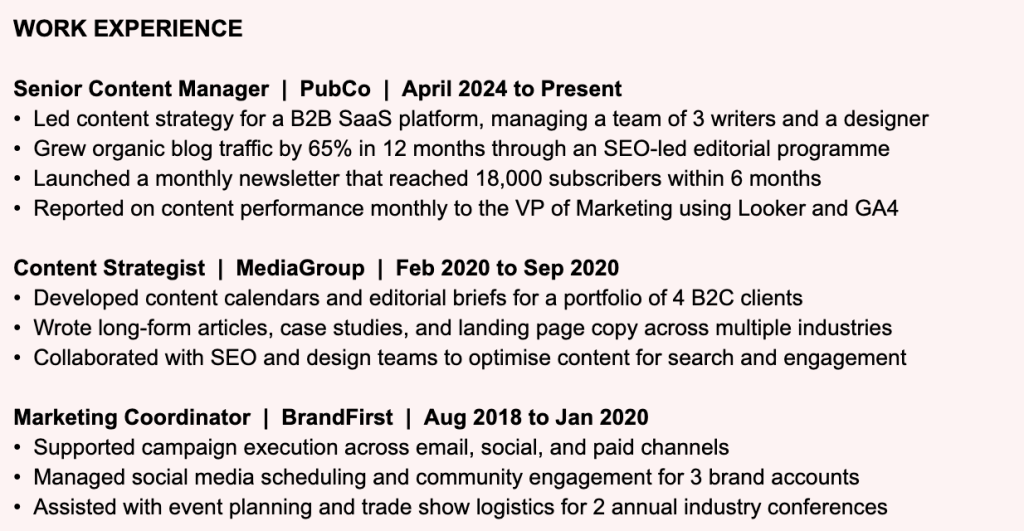
✅ After – Gap explained clearly within the work experience section
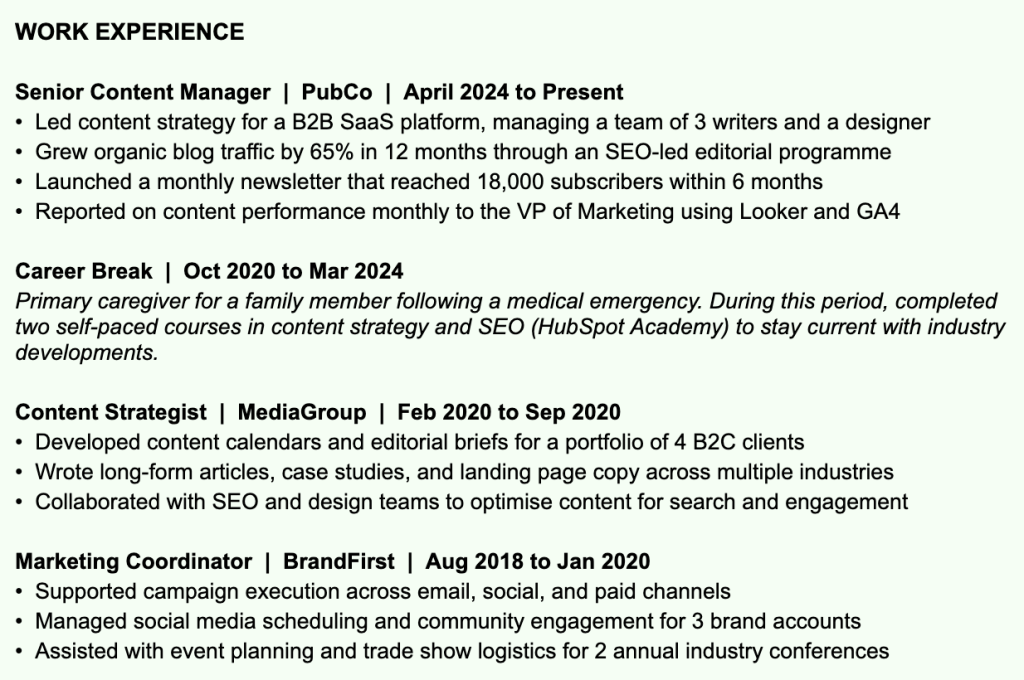
Leaving gaps unexplained or trying to hide short stints by removing dates can raise more questions than it answers. Recruiters notice these things, and it can create doubt about your application even before the interview stage.
Step 10: List a Balanced Skill Set
Your skills section should be a focused list of the hard skills most relevant to the role you are applying for. It should not be a long list of everything you have ever learned, and it should not be full of soft skills like “good communicator” or “team player.”
Soft skills are best shown through your achievements in the work experience section. In the skills section, stick to technical and role-specific skills that are either mentioned in the job description or directly relevant to the work.
❌ Before

✅ After

Aim for 5 to 10 skills that are genuinely relevant. Grouping them by category can also make this section easier to read.
A skills section full of soft skills or irrelevant tools can make your resume look padded. It also takes up space that could be used for something more useful, and ATS systems are looking for specific technical keywords, not generic traits.
Step 11: Bridge the Title Gap
Sometimes the job title you are applying for does not exactly match the title you currently hold or have held before. This can be a problem because ATS systems and recruiters both look for familiar titles.
If your current job title is very different from the job you’re applying for, your resume might not get discovered even if your responsibilities and experience are a strong match.
Now, there are two simple ways to bridge this gap without misrepresenting yourself.
For example:

For example:

Step 12: Learn and Iterate
If you have been sending out your resume for a while and not hearing back, it is worth asking yourself if it is working. People put a lot of effort into their resumes and then feel reluctant to change them, even when they are not getting results.
The truth is, no resume is perfect for every role or every recruiter. If your current format is not working, trying something different doesn’t mean you’re giving up. By changing the resume format, you’re just being smart about your approach.
Here are a few things worth trying if your resume is not getting noticed:
Sticking with a resume that is not working because you have invested time in it means continuing to miss out on opportunities. Small changes can sometimes make a big difference in how your resume lands.
Get Your Resume Noticed Using Upplai
You can follow every tip in this guide and still not know whether your resume is actually getting noticed by the recruiters. Now, what if you had a virtual recruiter tell you how to improve your resume and why?
Upplai is that guide.
With Upplai, getting noticed by the recruiter is simple. You upload your resume and paste the link to the job description. Upplai will calculate the ATS score of your current resume and tailor it based on the job.
Also, it will suggest changes and explain to you why you should make them. As you edit your resume, it scores it against the job description in real time. You do not have to download it, make changes somewhere else, and re-upload to check. You see exactly where you stand as you go, which saves a lot of time and a lot of guesswork.
But here’s what makes Upplai different from other resume builder tools: