

TLDR:
- Include hobbies only if you’re early-career (recent graduate or career changer), the hobby demonstrates job-relevant skills mentioned in the job description, or you’re applying to creative industries/startups that value cultural fit
- Skip hobbies if you have 10+ years of relevant experience, are applying to conservative industries (law, finance, government), or your interests are generic activities that don’t demonstrate specific skills
- Format at the bottom of your resume (2-3 lines maximum) using: Hobby name + specific detail + skill demonstrated (e.g., “Marathon Running: Completed 6 marathons; demonstrates discipline and goal-setting” not “Enjoy running”)
- Avoid controversial topics (political/religious activities), vague interests (“reading,” “traveling” without specifics), passive consumption, or anything you can’t discuss confidently for 2-3 minutes in an interview
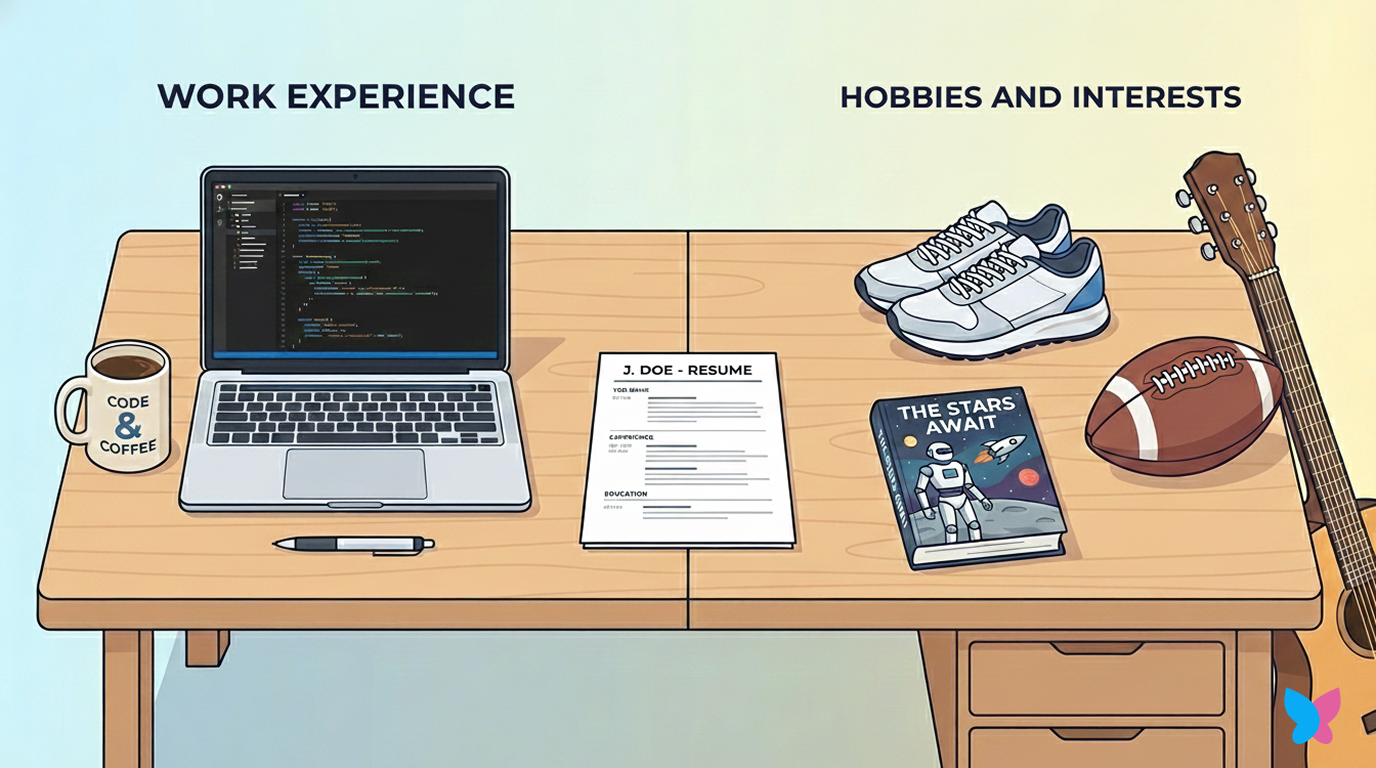
The debate about hobbies on your resume isn’t new, but the answer isn’t simple. Research shows 84% of recruiters say culture fit is a key factor in hiring decisions, yet hobbies add value only when they demonstrate relevant skills or that cultural alignment. The rest of the time, it’s wasted real estate that could have otherwise showcases your professional experience.
Here’s what actually matters: hobbies that demonstrate transferable skills, showcase personality traits relevant to the role, or fill strategic gaps for early-career candidates. Everything else is noise.
When Hobbies Strengthen Your Resume
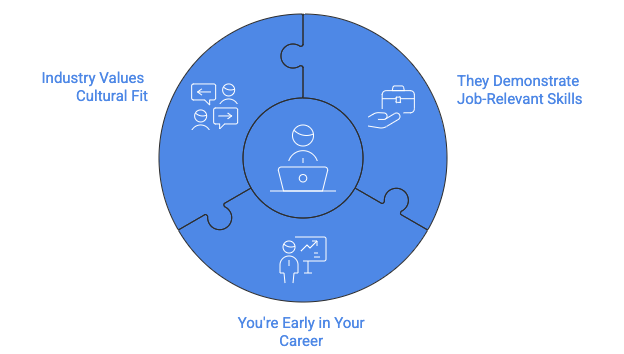
They Demonstrate Job-Relevant Skills
The interests section works when it translates directly to capabilities the job requires. A hobby that develops leadership skills, problem-solving abilities, or technical proficiency isn’t just a pastime; it’s evidence of competence.
Strong examples by skill category:
| Skill Required | Relevant Hobbies | What It Demonstrates |
|---|---|---|
| Leadership skills | Team sports captain, volunteer coordinator, community organization leader | Ability to motivate teams, delegate tasks, manage group dynamics |
| Communication skills | Public speaking clubs, blogging, podcast hosting, debate team | Clear articulation, persuasive writing, audience engagement |
| Problem-solving | Chess, coding projects, escape room enthusiast, strategy games | Analytical thinking, pattern recognition, creative solutions |
| Attention to detail | Photography, woodworking, model building, editing | Precision, quality focus, patience with complex tasks |
| Collaboration | Team sports, band/orchestra, group volunteering | Teamwork, compromise, working toward shared goals |
The key distinction: the hobby must develop skills that transfer to the job description. “Reading” is too vague. “Reading industry publications and maintaining a technical blog on cybersecurity trends” demonstrates continuous learning and communication skills relevant to an IT security role.
You’re Early in Your Career
For recent graduates and career changers, hobbies fill the professional experience gap strategically. When you lack 10 years of work history, relevant interests prove you’ve developed applicable skills outside formal employment.
When hobbies carry more weight:
Context matters: recruits are 50% more likely to search for candidates by skills rather than years of experience, making skill-demonstrating hobbies increasingly valuable for early-career candidates
A computer science graduate who contributes to open-source projects shows initiative and real-world coding ability. A career changer from teaching to corporate training who coaches youth sports demonstrates leadership skills and instructional design thinking.
Industries That Value Cultural Fit
Creative industries, startups, and companies with strong cultural identities often weigh personality fit heavily. In these contexts, hobbies help hiring managers envision you in their environment.
Industries where interests matter more:
A design agency might value that you’re an amateur photographer. A startup might appreciate that you organize local tech meetups. These aren’t just hobbies, they’re cultural signals.
When to Skip the Interests Section
Your Professional Experience Speaks Loudly Enough
Mid-career and senior professionals with 10+ years of relevant experience don’t need hobbies to prove competence. Every line on your resume should justify its existence, and for experienced candidates, professional achievements always outweigh personal interests.
Skip hobbies if:
A senior software engineer with 15 years at major tech companies doesn’t need to mention that they enjoy hiking. That space is better used for quantifiable achievements like “Led migration to microservices architecture, reducing system latency by 47%.”
The Hobbies Add No Professional Value
Generic interests that don’t demonstrate relevant skills waste space and make you look like you’re padding your resume. Worse, they can actively harm your candidacy by appearing unprofessional or controversial.
Hobbies to avoid:
The test: Does this hobby demonstrate a specific, job-relevant capability? If not, cut it.
You’re Applying to Conservative Industries
Traditional fields like law, finance, and government often view hobbies sections as unprofessional or frivolous. These industries prioritize credentials, experience, and measurable results over personality indicators.
Industries that typically don’t value hobbies:
When in doubt, research the company culture. If their job postings emphasize “results-oriented” and “proven track record” without mentioning “culture fit” or “team personality,” skip the interests section.
How to Format Your Interests Section Effectively
Placement and Length
The interests section always appears at the bottom of your resume. Basically, after professional experience, the education section, and the skills section. It should never exceed 2-3 lines or 3-5 bullet points.
Optimal structure:
- Marathon Running: Completed 6 marathons; demonstrates discipline, goal-setting, and perseverance under pressure
- Open Source Contribution: Active contributor to Python data visualization libraries; strengthens coding skills and collaboration
- Volunteer Teaching: Teach coding basics to underserved youth through local nonprofit; develops communication and mentorship abilities
Notice the pattern: Hobby name + specific detail + skill it demonstrates. This format prevents vagueness and connects interests directly to professional capabilities.
Language That Works
Use action-oriented language that emphasizes what you’ve accomplished or learned through the hobby, not just that you enjoy it.
Weak vs. Strong phrasing:
| ❌ Weak (Passive) | ✅ Strong (Active) |
|---|---|
| “Enjoy photography” | “Photography: Published work in local gallery” => Demonstrates attention to detail and visual communication |
| “Like playing soccer” | “Soccer team captain: Led recreational league team to regional finals” => Demonstrates leadership and teamwork |
| “Interested in cooking” | “Culinary experimentation: Develop original recipes and host monthly dinner events” => Shows creativity and project management |
The difference is specificity and outcome. Strong phrasing proves you’ve done something meaningful with the interest, not just consumed content passively.
Connecting Hobbies to Job Requirements
The most effective interests sections mirror language from the job description. If the posting emphasizes “collaboration” and “innovative thinking,” your hobbies should demonstrate exactly those traits.
Strategic alignment example:
Job description requirement: “Seeking candidate with strong analytical skills and ability to work independently”
Aligned interests section:
This approach works because it reinforces your fit for the role using evidence from multiple life areas, not just work history.
What ATS Systems Think About Hobbies
Applicant Tracking Systems don’t inherently penalize or reward hobbies sections, but they can affect your ATS score indirectly. Here’s what actually happens when ATS software scans your interests.
Keyword Matching Still Applies
If your hobby description includes keywords from the job description, the ATS registers those matches. A hobby that mentions “project management,” “team leadership,” or “data analysis” can contribute to your keyword score, but only marginally compared to professional experience.
How it works:
Example: A job posting for a marketing manager emphasizes “content creation” and “social media strategy.” An interests section that says “Maintain travel blog with 10K monthly readers; manage Instagram account with engagement-focused content strategy” includes relevant keywords that the ATS will recognize.
That said, you should never add hobbies solely to game the ATS. The keyword boost is minimal, and if the hobby isn’t genuine or relevant, it’ll hurt you in the human review stage.
For comprehensive ATS guidance, see our complete ATS optimization guide.
Formatting Matters More Than You Think
ATS systems struggle with unusual formatting, graphics, and non-standard section headers. If your interests section uses creative layouts or unconventional naming, the ATS might not parse it correctly.
ATS-friendly formatting:
The goal is making your resume machine-readable first, human-compelling second. AI resume builders like Upplai automatically ensure ATS-friendly formatting while helping you identify which hobbies actually demonstrate skills relevant to your target role.
Common Mistakes That Undermine Your Resume
Listing Too Many Hobbies
More isn’t better. A laundry list of 8-10 interests looks like padding and dilutes the impact of genuinely relevant activities. Recruiters spend an average of 7 seconds on initial resume review and they won’t read a paragraph of hobbies.
The rule: 3-5 interests maximum. If you can’t narrow it down, your hobbies probably aren’t strategic enough to include.
Being Too Vague
“Reading” tells recruiters nothing. Reading what? Industry publications that keep you current? Historical biographies that inform your leadership philosophy? Technical documentation that strengthens your computer proficiency?
Specificity transforms weak hobbies into strong ones:
❌ Don’t say
“Traveling”
✅ Say
“International travel to 15 countries; developed cross-cultural communication skills and adaptability”
❌ Don’t say
“Volunteering”
✅ Say
“Volunteer coordinator for Habitat for Humanity; managed teams of 20+ volunteers on construction projects”
The more specific you are, the more credible and relevant the hobby becomes.
Including Controversial or Polarizing Activities
Political campaigns, religious organizations, and activist groups might be meaningful to you, but they risk alienating hiring managers with different views. Unless you’re applying to an organization explicitly aligned with that cause, leave controversial activities off your resume.
High-risk hobby categories:
This isn’t about hiding who you are as it’s about strategic self-presentation. Save deeper personal discussions for interviews when you can provide context and read the room.
Lying or Exaggerating
Claiming you’re an “avid rock climber” when you’ve been to a climbing gym twice is a terrible idea. Interviewers often use hobbies as icebreakers, and getting caught in an exaggeration damages your credibility immediately.
The interviewer test: Only include hobbies you could discuss comfortably for 2-3 minutes if asked. If you can’t explain what you’ve learned, accomplished, or why you’re passionate about it, don’t list it.
This specificity is critical: 54% of organizations now use pre-employment assessments to gauge skills, meaning vague hobby descriptions won’t satisfy employers seeking concrete evidence of capabilities.
Industry-Specific Guidance
Tech and Startups
Technology companies and startups typically value hobbies that demonstrate continuous learning, technical curiosity, and cultural fit with fast-paced environments.
Strong hobbies for tech roles:
These activities prove you code because you love it, not just because it’s your job which is a quality tech companies prize highly.
Creative Industries
Design, advertising, media, and entertainment fields want to see hobbies that showcase creative strengths, aesthetic sensibility, and cultural awareness.
Strong hobbies for creative roles:
These interests demonstrate that creativity permeates your life, not just your 9-to-5.
Business and Finance
Traditional business roles value hobbies that demonstrate leadership, strategic thinking, and results orientation.
Strong hobbies for business roles:
These activities signal ambition, competitiveness, and leadership potential which traits business environments reward.
Customer Service and Hospitality
Customer-facing roles benefit from hobbies that demonstrate interpersonal skills, patience, and service orientation.
Strong hobbies for service roles:
These interests prove you genuinely enjoy working with people and creating positive experiences.
Smart Formatting Shortcut
Deciding whether to include a hobbies section on your resume, and if yes, which hobbies to include and how to describe them, can take significant time. When targeting multiple roles, this could easily become overwhelming. Resume optimization platforms like Upplai automatically assess whether your interests section strengthens your application and suggest descriptions that demonstrate relevant skills, keeping your resume authentic while maximizing impact.
Quick Decision Framework: Include Hobbies or Not?
Use this checklist to decide whether your interests section strengthens your job application:
✅ Include hobbies if:
❌ Skip hobbies if:
⚠️ Reconsider your hobby choices if: