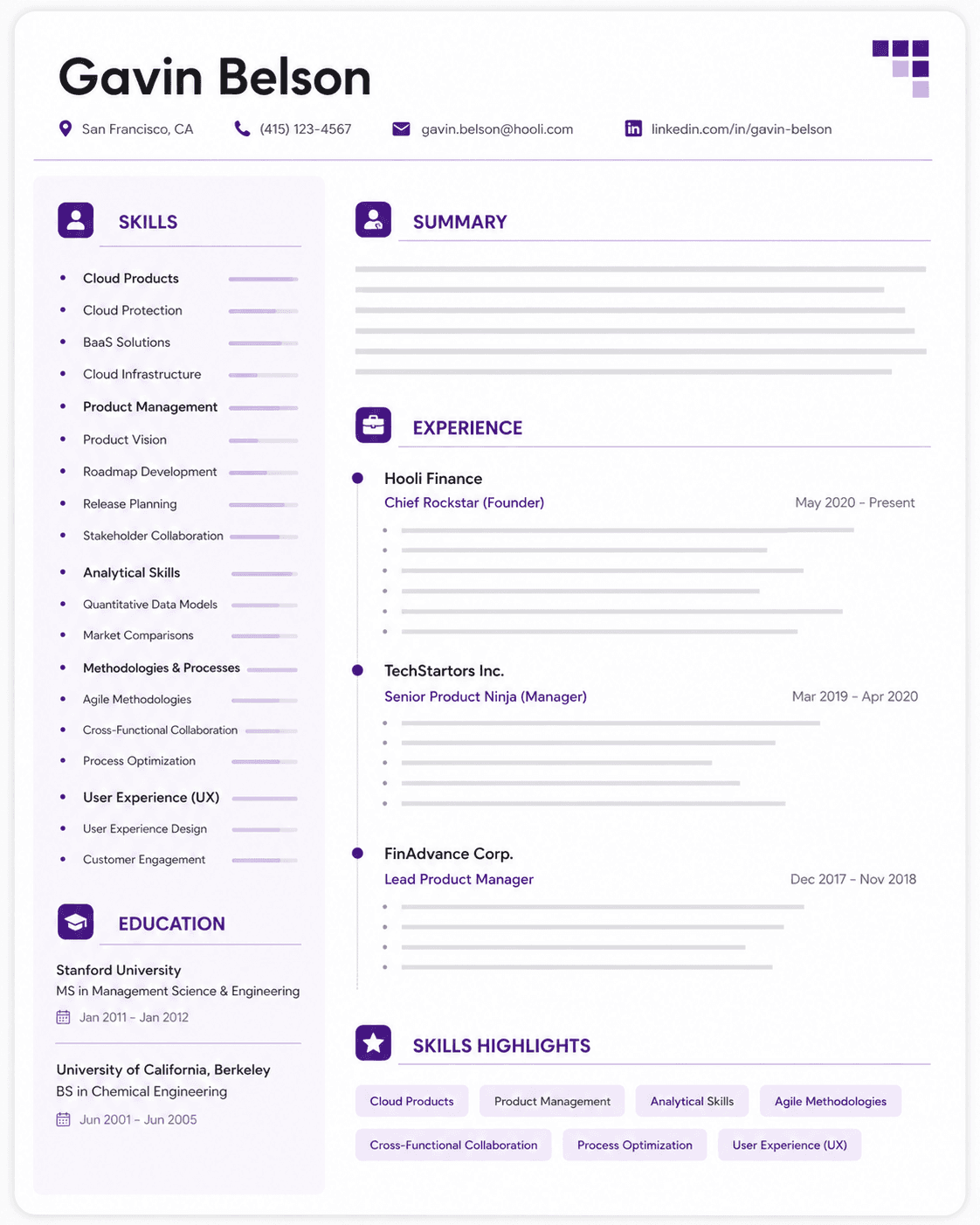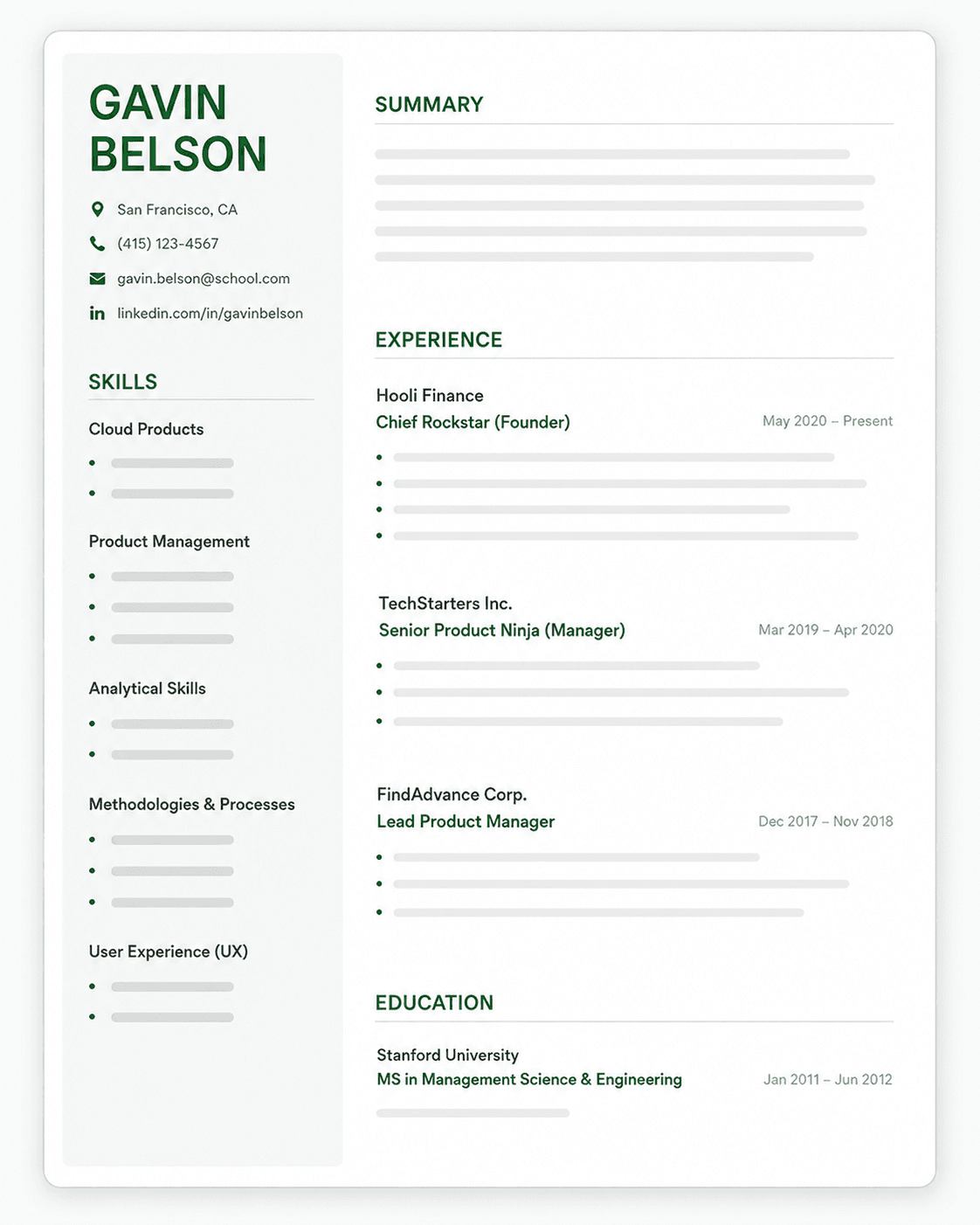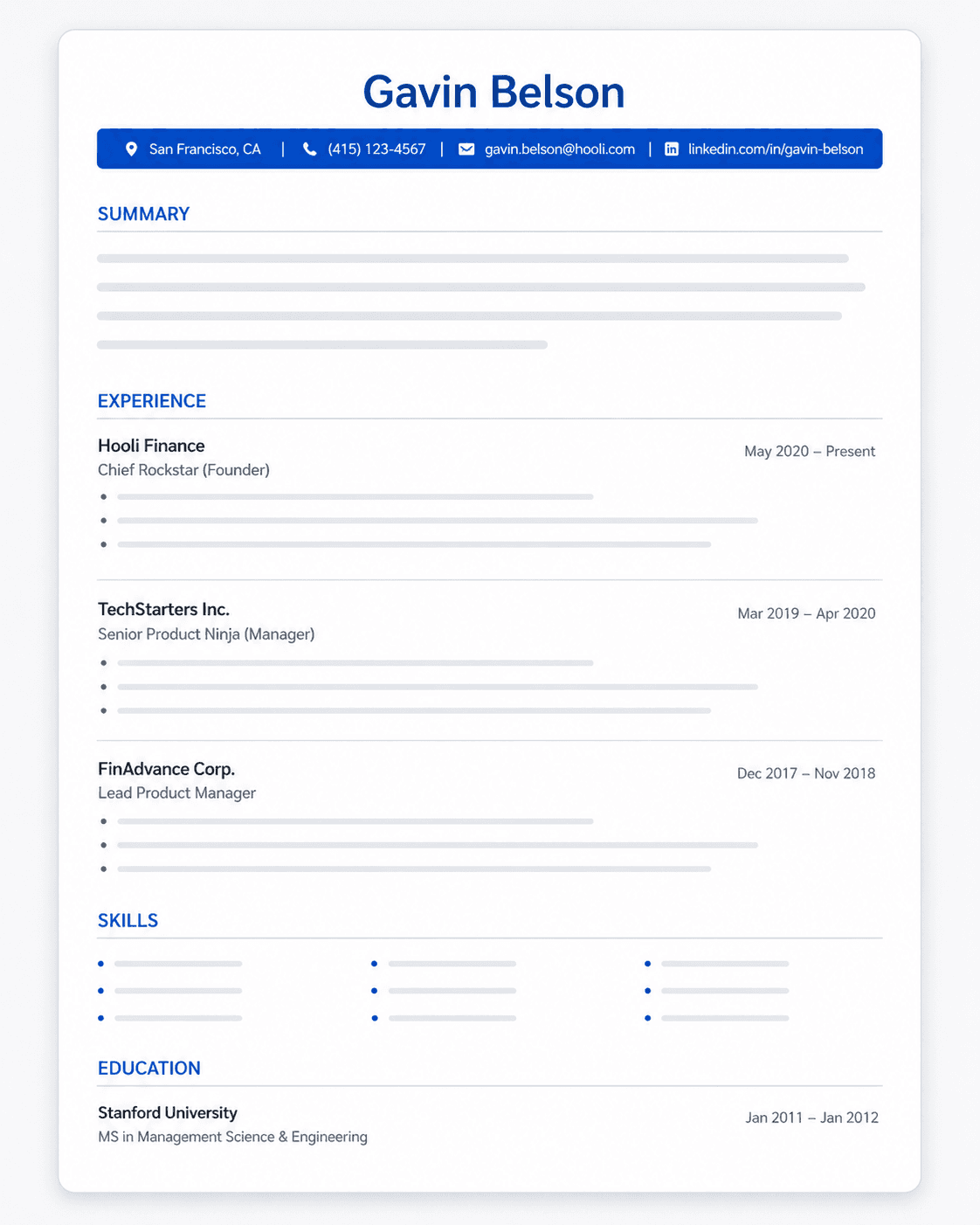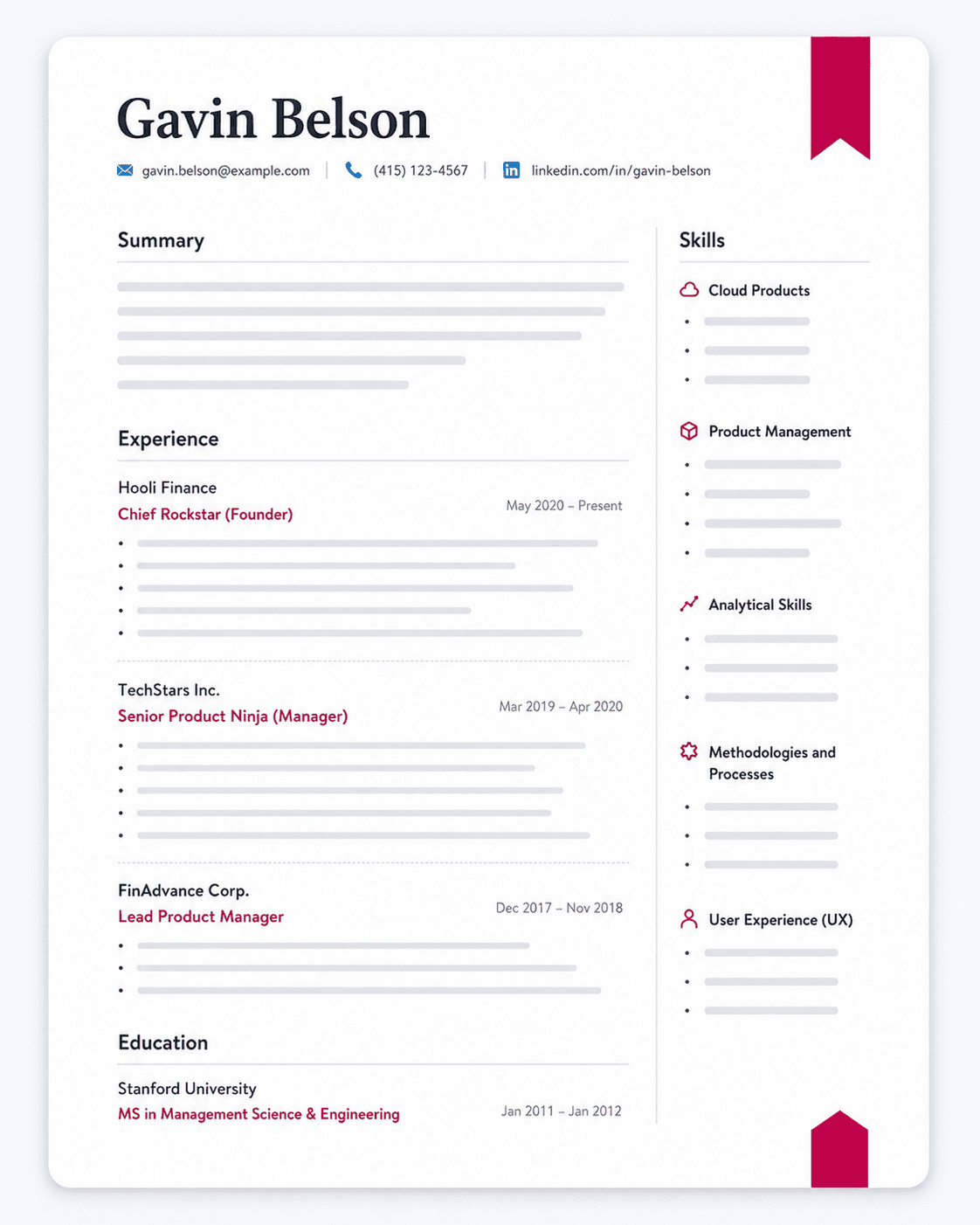
When you're applying for jobs in the United States, understanding the US resume format isn't optional—it's essential. American resumes follow specific conventions that differ significantly from CVs used in other countries, and getting these details wrong can cost you interviews before a human ever sees your application.
This guide breaks down exactly what makes a US resume effective, from structure and formatting to content strategy and ATS optimization. Whether you're an international applicant adapting to the American job market or a US-based professional looking to strengthen your application materials, you'll learn the practical standards that recruiters and Applicant Tracking Systems expect.
What Is a US Resume?
A US resume is a concise, targeted document, typically one to two pages, that summarizes your professional qualifications for a specific job. Unlike the comprehensive CVs common in Europe, Asia, and academia, American resumes focus on relevant achievements and skills rather than exhaustive career histories.
The key characteristics of US resumes include:
- Brevity: One page for early-career professionals, two pages maximum for experienced candidates
- Achievement focus: Emphasis on measurable results rather than job duties
- Customization: Tailored to each specific job description
- ATS compatibility: Formatted to pass Applicant Tracking System filters used by the majority of large employers
- No personal information: Excludes photos, age, marital status, or other personal details that are standard in other countries
Understanding these fundamentals helps you avoid common mistakes that immediately flag your application as unfamiliar with American hiring practices.
Essential Sections of a US Resume
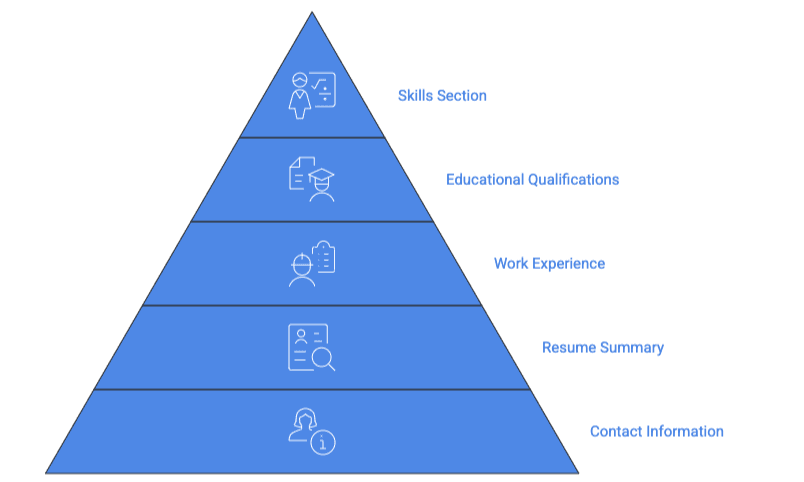
Every effective US resume includes these core sections in a specific order that recruiters expect:
Contact Information
Place your contact details at the top of your resume. Include:
- Full name (larger font, bold)
- Phone number (US format preferred)
- Professional email address
- City and state (full street address not required)
- LinkedIn profile URL (optional but recommended)
- Portfolio or personal website (if relevant to your field)
What to exclude: Photos, date of birth, marital status, social security number, or nationality. Including these can actually hurt your chances, as US employers avoid this information to prevent discrimination claims.
Resume Summary or Objective Statement
A resume summary (2-4 lines) appears directly below your contact information and provides a snapshot of your professional identity. This section has replaced the outdated objective statement for most professionals.
When to use a summary: If you have 2+ years of experience or clear career direction
When to use an objective: If you're a recent graduate, changing careers, or have significant employment gaps
Example summary for experienced professional:
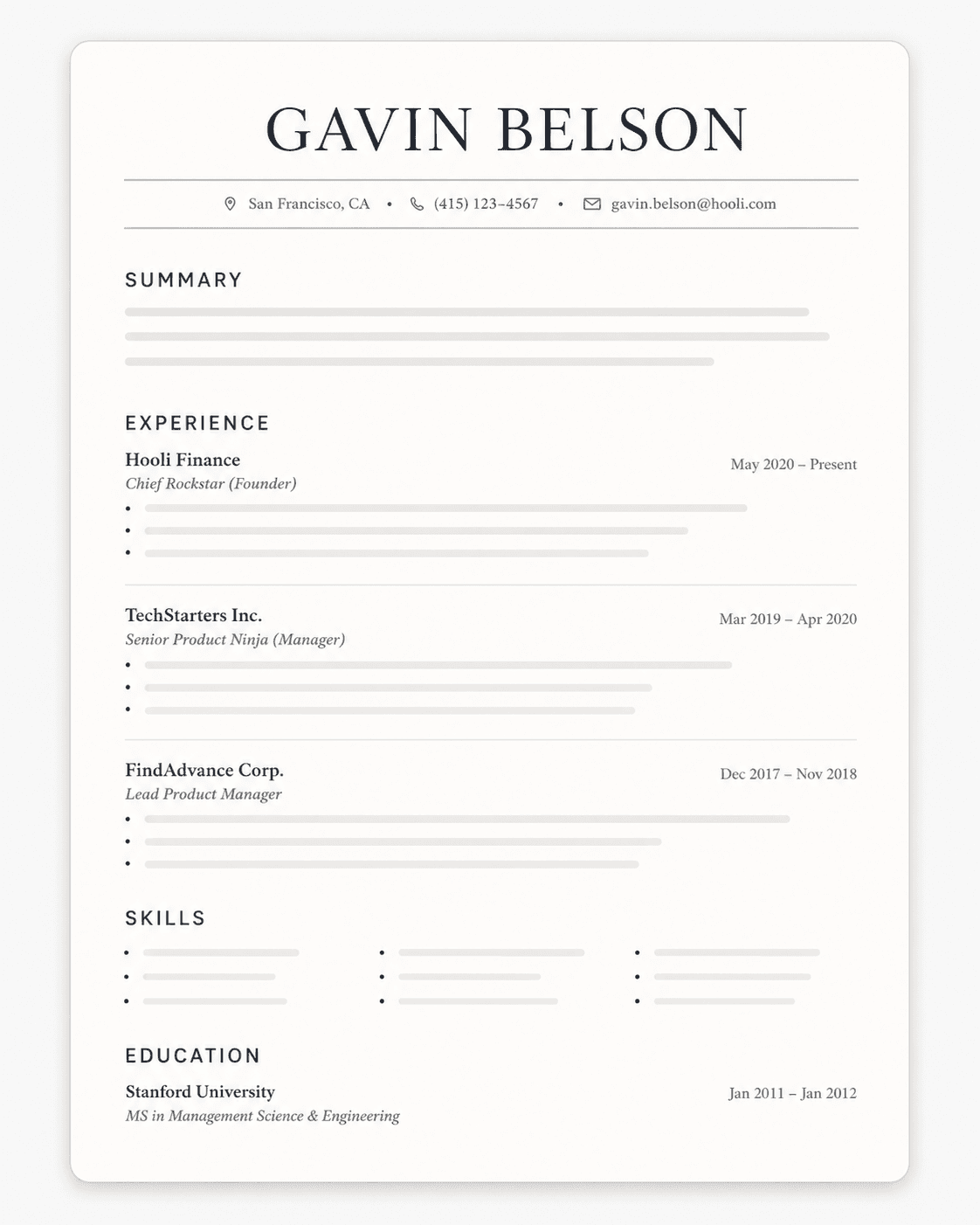
SUMMARY
Senior Marketing Manager with 8+ years driving digital campaigns for B2B SaaS companies. Increased qualified lead generation by 240% and reduced customer acquisition costs by 35% through data-driven content strategy and marketing automation. Expertise in demand generation, SEO, and cross-functional team leadership.
For additional guidance on how to write an effective summary or objective section, refer to this article.
Work Experience
This is the most critical section of your US resume. List your employment history/work experience in reverse chronological order (most recent first), including:
- Job title
- Company name
- Location (city, state)
- Employment dates (month and year)
- 3-6 bullet points describing achievements and responsibilities
Achievement-focused bullet points are non-negotiable in American job applications. Each bullet should follow this pattern:
[Action verb] + [what you did] + [measurable result]
Example work experience entry:
Marketing Manager | TechStart Solutions | Austin, TX | June 2020 – Present
- Increased organic website traffic by 185% over 18 months through SEO optimization and content marketing strategy
- Managed $500K annual marketing budget across 6 channels, achieving 32% ROI improvement year-over-year
- Led cross-functional team of 5 to launch product rebrand, resulting in 45% increase in qualified demo requests
- Implemented marketing automation platform (HubSpot) that reduced lead response time from 24 hours to 2 hours
Notice how each bullet quantifies impact with specific metrics. This approach immediately distinguishes strong candidates from those who simply list job duties.
For additional guidance on how to effectively list your work experience, refer to this article.
Educational Qualifications
List your education in reverse chronological order, including:
- Degree type and major
- University name
- Location (city, state)
- Graduation year (or expected graduation)
- GPA (only if 3.6+ on a 4.0 scale, and you're within 5 years of graduation)
- Relevant honors, awards, or coursework (optional)
Example:
Bachelor of Science in Computer Science
University of California, Berkeley | Berkeley, CA | 2018
GPA: 3.8/4.0 | Dean's List (4 semesters)
For current students and recent grads, the education section should be at the top (above the experience section) if you don't have sufficient relevant experience. For experienced professionals (5+ years), education can move to the bottom of your resume since work experience becomes more relevant than academic credentials.
For additional guidance on how to list your academic credentials, refer to this article.
Skills Section
The skills section serves two critical purposes: it helps your resume pass ATS filters and gives recruiters a quick snapshot of your technical capabilities.
Organize skills into categories:
| Category | Skills |
|---|---|
| Technical Skills | Python, SQL, Tableau, AWS, Git, Docker |
| Marketing Tools | Google Analytics, HubSpot, Salesforce, SEMrush |
| Soft Skills | Project management, stakeholder communication, data analysis |
| Languages | English (native), Spanish (professional working proficiency) |
- Hard skills (technical, measurable abilities) should dominate this section.
- Soft skills (communication, leadership) are better demonstrated through your work experience bullet points rather than simply listed.
- Do NOT use any graphics or scale to rate your expertise on any skill. Only list skills that you can confidently demonstrate.
Example skills section:
SKILLS
- Technical: Cloud computing, Cybersecurity, Data Analysis, Machine Learning
- Programming: C++, Java, Python, SQL
- Software: Adobe Creative Suite, AutoCAD, Salesforce, Tableau
- Management: Budget Planning, Resource Allocation, Team Leadership
For additional guidance on how to effectively communicate your skills, refer to this article.
US Resume Formatting Best Practices
Most US employers use software called Applicant Tracking System (ATS) for ranking and screening resumes. ATS systems can't read images, graphics, headers, and footers, and are easily confused by complex formatting like tables and columns. As a result, how you format your resume could determine whether your resume gets read by humans or rejected by ATS.
Layout and Design
Follow these American resume best practices for both humans (recruiters) and machines (ATS)
- Length: 1 page for 0-10 years experience, 2 pages for 10+ years
- Margins: 0.5 to 1 inch on all sides
- Font: Professional, readable fonts (Calibri, Arial, Garamond, Georgia) in 10-12pt
- Section headers: Bold, slightly larger (14-16pt), consistent formatting
- White space: Adequate spacing between sections for readability
- Alignment: Left-aligned text (never center or justify body text)
ATS-Friendly Resume Requirements
Follow these best practices to ensure that your resume can be read by ATS systems:
- Standard section headers (avoid creative titles like "Where I've Been" instead of "Work Experience")
- No headers, footers, or text boxes
- No tables for main content
- No images, graphics, or charts
- Standard bullet points (•) rather than custom icons
- .docx or PDF format (check job posting for preference)
For additional tips on how to make your resume ATS-friendly and get real examples of ATS-friendly resume templates for different industries and experience levels, refer to this article.
ATS optimization goes beyond formatting. Applicant Tracking Systems scan for keywords from the job description, rank candidates based on keyword matches, and filter out resumes that don't meet minimum requirements. This is why it is recommended that you tailor your resume to each job posting to improve your interview chances.
This guide discusses how to identify industry and job specific ATS keywords and include them in your resume to pass ATS screening.
If this sounds like a lot of work, it is. But the good news is that with the advancement of AI, you now have access to tools like Upplai that will automatically identify the right keywords, add them to your resume, and also format your resume to help you pass ATS filters.
How to Tailor Your Resume for American Job Applications
Generic resumes don't work in the US job market. Tailoring your resume to each specific job description is the single most effective strategy for getting past ATS filters and catching recruiter attention.
The Tailoring Process
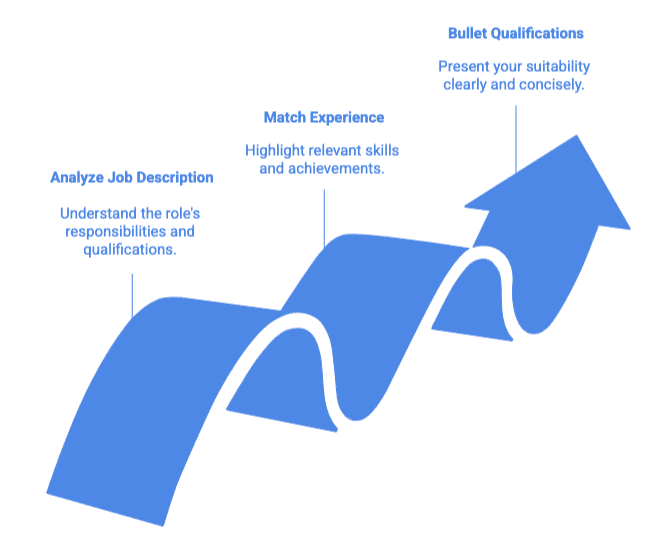
How To Tailor Your Resume To A Job Description
-
Analyze the job description
Identify the most important requirements by looking for:
• Skills or qualifications mentioned multiple times • Requirements listed in the first paragraph • "Must-have" vs. "nice-to-have" qualifications • Industry-specific terminology and keywords
-
Match your experience to requirements
For each key requirement, find examples from your work history that demonstrate that skill or qualification. If you're missing a requirement, determine if you have transferable experience that's relevant.
-
Rewrite bullet points
Adjust your work experience bullet points to emphasize the most relevant achievements for this specific role. This doesn't mean lying- it means highlighting different aspects of your actual experience.
Example of Resume Tailoring
Original bullet point:
"Managed customer service team and handled escalated complaints"
Tailored for customer success role emphasizing retention:
"Led 8-person customer success team, reducing churn by 23% through proactive outreach program and escalation resolution"
Tailored for operations role emphasizing process improvement:
"Streamlined customer complaint resolution process, reducing average resolution time from 48 hours to 12 hours while maintaining 95% satisfaction rating"
Same experience, different emphasis based on what the target role values most.
Common Resume Mistakes to Avoid
Even strong candidates make these errors that immediately weaken their American job applications:
Content Mistakes
- Listing job duties instead of achievements
- Including irrelevant work experience from 15+ years ago
- Using first-person pronouns ("I managed..." instead of "Managed...")
- Vague descriptions without metrics ("Improved sales" vs. "Increased sales by 34%")
- Including personal information (age, photo, marital status)
Formatting Mistakes
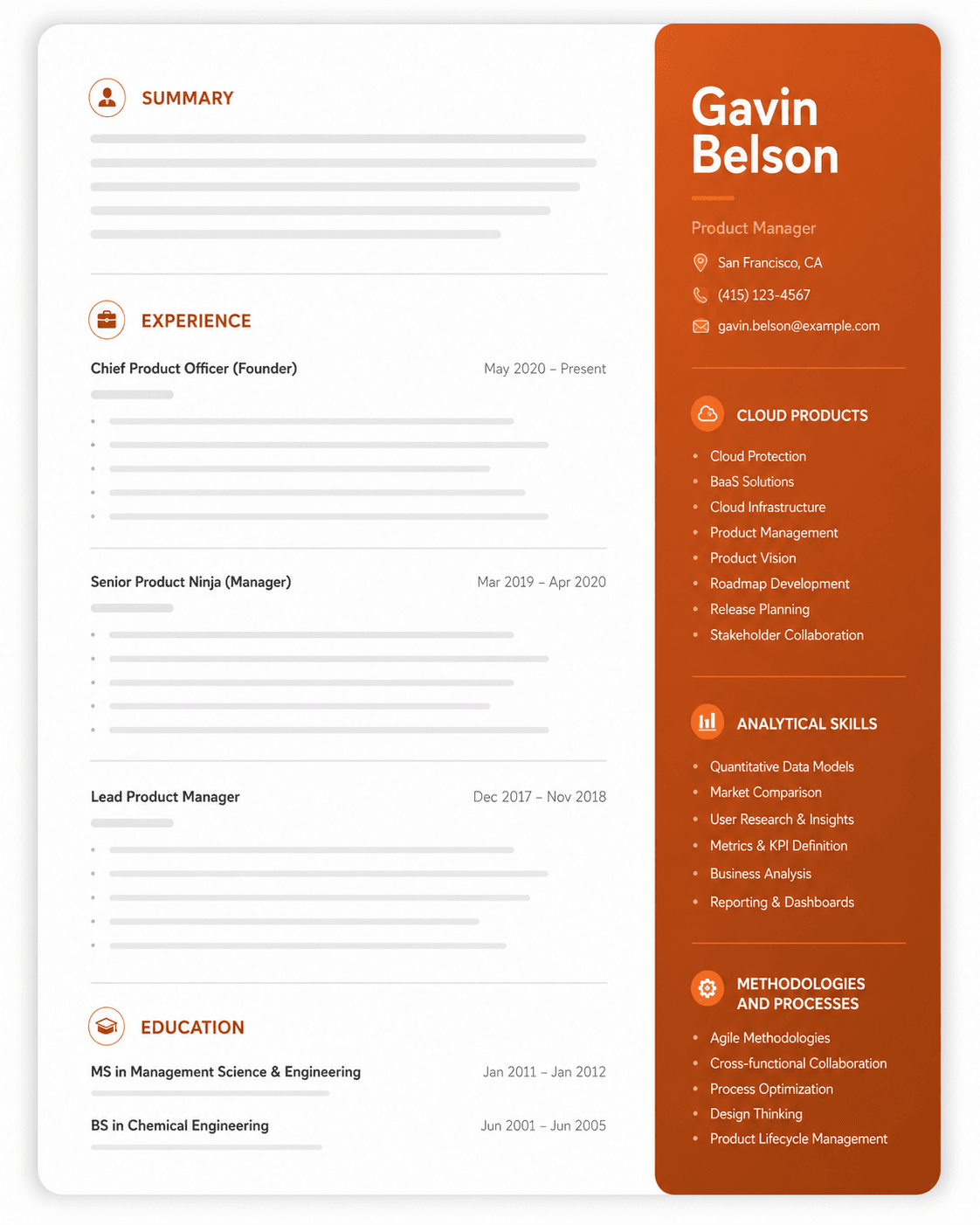
- Using creative templates with graphics that break ATS parsing
- Inconsistent date formatting (choose one style and stick with it)
- Typos and grammatical errors (absolutely unacceptable)
- Font size too small (under 10pt) or too large (over 12pt for body text)
- Exceeding two pages without executive-level experience to justify it
Strategic Mistakes
- Sending the same resume to every job
- Ignoring keywords from the job description
- Leading with outdated or irrelevant experience
- Underselling achievements with passive language
Resume Tips for International Applicants
If you're adapting to the American job market from another country, these differences matter:
Key adjustments for international candidates:
| Aspect | US Resume | International CV |
|---|---|---|
| Length | 1-2 pages maximum | Often 3+ pages |
| Personal info | No photo, age, or marital status | Often includes photo and personal details |
| Focus | Achievement and results | Comprehensive work history |
| Education | Brief, degree and institution only | Detailed coursework and grades |
| References | "Available upon request" or omitted | Often listed on document |
Work authorization: If you require visa sponsorship, address this in your cover letter instead of your resume.
International experience: When listing work experience from other countries, include the country name along with the city. Use US date formatting (Month Year) rather than DD/MM/YYYY format common elsewhere.
Optimizing Your US Resume for Maximum Impact
Creating an effective US resume requires understanding both human readers and ATS algorithms. Here's how to optimize for both:
For Applicant Tracking Systems
Your resume needs to score well on keyword matching to reach human reviewers. This means:
- Mirror job description language: If the posting says "project management," use that exact phrase rather than "project coordination"
- Include acronyms and full terms: Write "Search Engine Optimization (SEO)" to capture both variations
- Use standard section headers: "Work Experience" not "Professional Journey"
- Incorporate keywords naturally: Don't just list keywords—integrate them into your bullet points
For Human Recruiters
Remember that recruiters spend an average of 5-7 seconds on initial resume screening. Make those seconds count:
- Lead with your strongest qualifications: Put your most impressive, relevant achievements in the first 1-2 bullet points of each role
- Use visual hierarchy: Bold, spacing, and section headers guide the eye to important information
- Quantify everything possible: Numbers stand out and provide concrete proof of impact
- Keep it scannable: Short paragraphs, bullet points, and clear section breaks
The challenge is that manually identifying all relevant keywords and tailoring your resume to include these keywords along with emphasizing what the recruiter is looking for—can easily take upwards of 40 minutes per job. This is where AI-powered resume optimization tools like Upplai become practical.
Key Takeaways
| ✅ INCLUDE | ❌ AVOID |
|---|---|
| Match the job posting language and include ATS keywords. Use the exact terms from the job description to pass through Applicant Tracking Systems and get your resume in front of recruiters. | Skip fancy fonts, graphics, and complex formatting. ATS systems often can't read them, and they make it harder for recruiters to scan your resume. |
| List jobs in reverse chronological order with results-focused bullet points. Use action verbs and quantify achievements with metrics (e.g., "Increased sales by 30%" not just "Responsible for sales"). | Leave out personal information like age, gender, marital status, religion, ethnicity, or street address. This information isn't relevant and can introduce bias. |
| Add a header with your contact information: full name, phone, email, city and state, and LinkedIn profile. | Skip the "references available upon request" line. Employers know they can ask for references if needed. |
| Write a concise summary or objective (2-3 sentences) highlighting your key skills, achievements, and career goals. | Don't mention visa status or work eligibility on your resume. Include it in the cover letter instead or discuss this during your recruiter interview. |
| Highlight both hard and soft skills that match the role. Include relevant extras like volunteering, projects, awards, certifications, or languages. | Only include hobbies if they're directly relevant to the job and you lack other experience. |
| Use American English spelling (color, organize, customize) for US job applications. | Don't include a photo unless specifically required for the role (e.g., modeling, acting). |